Adopting a healthy lifestyle
The concept of a healthy lifestyle has become increasingly complex in our modern world. While most people understand the importance of eating well and exercising, truly sustainable health extends far beyond these basics. It encompasses how we move throughout the day, the quality of our sleep, our ability to manage stress, and the strength of our social connections. For Canadians navigating long winters, sedentary office work, and the unique challenges of northern living, understanding these interconnected pillars becomes even more critical.
This comprehensive resource explores the evidence-based foundations of healthy living, from correcting the damage of prolonged sitting to optimizing your body’s natural sleep hormones. Whether you’re looking to reverse chronic health conditions, enhance brain function, or simply feel better in your daily life, the strategies outlined here provide a roadmap for meaningful, lasting change. Each section connects practical techniques with the underlying science, empowering you to make informed decisions about your health.
Understanding the Foundation: What Makes a Lifestyle Truly Healthy?
The modern approach to preventing and reversing chronic disease has shifted dramatically. Rather than relying solely on pharmaceutical interventions, healthcare practitioners increasingly recognize that lifestyle medicine addresses root causes rather than symptoms. This paradigm focuses on six fundamental pillars: nutrition, physical activity, sleep, stress management, social connection, and avoidance of risky substances.
What distinguishes this approach is its recognition that moderation doesn’t always serve those seeking to reverse disease. A person with pre-diabetes cannot “moderately” continue the habits that created their condition. Instead, prescribed lifestyle changes—where exercise, sleep schedules, and social engagement are treated with the same precision as medication—offer the most powerful intervention available. Canadian healthcare systems have begun integrating these principles, with some provinces now covering lifestyle medicine consultations as preventive care.
The concept of allostasis versus homeostasis helps explain why this matters. While homeostasis refers to maintaining stable internal conditions, allostasis describes how our bodies adapt to stress by changing set points. Chronic stress from poor sleep, sedentary work, isolation, and environmental factors creates an accumulated burden that eventually overwhelms our adaptive capacity. Understanding this total load—both psychological and physical—is essential for creating sustainable health improvements.
Movement and Posture: Building a Body That Serves You
The human body evolved for diverse, frequent movement, yet most Canadians spend the majority of their waking hours seated. This creates a cascade of problems: forward head posture from screen use, tight hip flexors from prolonged sitting, and reduced cardiovascular function. The solution isn’t simply adding an hour of exercise to an otherwise sedentary day—it requires integrating movement throughout daily life.
Correcting Sedentary Damage Through Daily Habits
The damage from sitting eight to ten hours daily cannot be fully offset by a single gym session. Instead, consider movement as a continuous practice. Dynamic mobility work—movements that take joints through their full range while active—proves more effective than static stretching for desk-bound individuals. A simple routine for hip mobility performed every two hours can prevent the chronic tightness that leads to lower back pain and postural dysfunction.
Contrary to popular belief, posture correctors and braces often worsen the problem by allowing supporting muscles to atrogate further. The effective approach involves optimizing your environment—monitor height that forces better spinal alignment, proper elbow positioning for keyboard use—while strengthening the muscles that maintain upright posture naturally.
Standing Desks: Benefits and Hidden Risks
Many Canadians have adopted standing desks as a solution, but static standing creates its own challenges, particularly for venous return—the blood flow from legs back to the heart. Standing motionless for hours can lead to varicose veins, leg fatigue, and even cardiovascular strain. The methodology for transitioning from sitting to standing requires gradual adaptation, alternating positions throughout the day, and avoiding the common error of leaning or loading one leg asymmetrically.
The debate between anti-fatigue mats and bare floors reveals nuanced considerations: while mats reduce joint stress, they can also encourage subtle swaying that creates its own fatigue. The optimal approach involves variation—alternating between sitting, standing, and walking throughout the workday.
Functional Movement for Real-World Strength
Traditional bodybuilding approaches that isolate individual muscles fail to prepare the body for daily life. Instead, primal movement patterns—squatting, lunging, pushing, pulling, twisting, and carrying—develop coordination and strength that transfers to real-world activities. The farmer’s carry, where you walk while holding weight in each hand, engages the entire body in a way that machines cannot replicate.
For Canadians seeking outdoor fitness that accommodates winter conditions, Nordic walking offers exceptional full-body engagement. Using poles correctly to drive upper body involvement can increase caloric expenditure by up to 20% compared to regular walking, while the technique provides stability on icy surfaces. The choice between carbon fiber and aluminum poles matters primarily for vibration reduction, with proper pole length being critical to avoid tripping hazards.
Sleep Quality: The Foundation of Daily Recovery
Quality sleep represents perhaps the most powerful health intervention available, yet modern life systematically undermines our body’s natural sleep mechanisms. Rather than relying on supplements, optimizing your own melatonin production through lifestyle changes creates sustainable improvements without dependency or side effects.
Light Exposure and the Pineal Gland
The pineal gland, a small structure deep in your brain, regulates sleep-wake cycles by producing melatonin in response to darkness. However, the specific light spectrum matters enormously. Blue wavelengths, prevalent in phone and computer screens, suppress melatonin production most powerfully. Many people mistakenly believe that “Night Mode” features make evening screen use safe, but these yellow-tinted displays still emit sufficient blue light to disrupt sleep architecture.
Effective blue light blocking requires either complete screen avoidance in the two hours before bed, or purpose-designed glasses that filter the specific wavelengths that affect the pineal gland. The investment in proper blocking technology pays dividends in sleep quality and next-day cognitive performance.
Dietary and Behavioral Sleep Optimization
Your body manufactures melatonin from dietary precursors, particularly the amino acid tryptophan found in foods like turkey, eggs, and pumpkin seeds. However, timing matters as much as nutrition. For individuals identified as slow caffeine metabolizers—approximately 50% of the population based on genetic variations—afternoon coffee can still circulate in the bloodstream at bedtime, fragmenting sleep cycles even if falling asleep seems unaffected.
Optimizing circadian habits extends beyond sleep itself. Consistent wake and sleep times, even on weekends, help regulate blood pressure and metabolic function. This proves particularly challenging during Canadian winters when natural light exposure decreases dramatically, but maintaining these rhythms becomes even more critical for health during darker months.
Thriving in Canada’s Climate: Seasonal Health Strategies
Living at northern latitudes presents unique health challenges that require intentional adaptation. The reduced daylight during winter months doesn’t merely affect mood—it creates cascading physiological changes that impact everything from vitamin synthesis to social behavior.
Light, Mood, and Vitamin D
The physiological impact of low light exposure on mood operates through multiple mechanisms. Reduced sunlight decreases serotonin production, disrupts circadian rhythms, and prevents adequate vitamin D synthesis in the skin. For Canadians living above the 49th parallel, the sun’s angle from October through March simply cannot provide sufficient UV-B radiation for vitamin D production, regardless of outdoor time.
Supplementation guidelines specific to northern latitudes typically recommend higher doses than standard protocols, often in the range of 1000-2000 IU daily during winter months, though individual needs vary based on baseline levels, skin tone, and other factors. Recent research from Canadian health institutions emphasizes the importance of testing vitamin D levels rather than assuming adequacy.
Cold Weather Activity and Social Connection
The temptation to hibernate during harsh winter months creates a dangerous cycle: reduced outdoor activity, decreased social contact, and worsening mood. Strategies for outdoor activity in sub-zero temperatures—layering properly, protecting extremities, understanding wind chill—enable maintenance of exercise routines and nature exposure even during January cold snaps.
The danger of social isolation intensifies during snowstorms and extreme cold periods when leaving home feels prohibitively difficult. This isolation carries measurable health consequences, with loneliness demonstrating comparable mortality risk to smoking fifteen cigarettes daily. Maintaining social connections during winter requires intentional planning, whether through indoor community activities, virtual check-ins with friends, or commitment to weather-appropriate outdoor group activities.
Indoor Environment Optimization
When Canadians spend more time indoors with heating systems running continuously, indoor air quality often deteriorates dramatically. Forced-air heating reduces humidity, circulates dust and allergens, and can concentrate volatile organic compounds. Simple interventions—regular filter changes, introducing humidity through humidifiers or houseplants, ensuring adequate ventilation even in cold weather—significantly improve respiratory health and sleep quality during heating season.
Brain Health: Maintaining Cognitive Vitality Through Lifestyle
Your brain’s ability to adapt and learn—its neuroplasticity—remains active throughout life, but requires specific conditions to thrive. The relationship between frustration and learning reveals a critical insight: moderate challenge that creates mild frustration actually signals the brain to strengthen neural connections. Too easy, and no adaptation occurs; too difficult, and stress hormones inhibit learning.
This principle explains why micro-learning sessions of 15-20 minutes often prove more effective than marathon study periods. The brain consolidates new information during rest periods following focused effort, making consistency more valuable than duration. When comparing language learning to puzzles for cognitive maintenance, language study provides superior benefits because it engages multiple brain systems simultaneously: auditory processing, memory formation, pattern recognition, and motor control for speech production.
The risk of routine on brain plasticity cannot be overstated. When every day follows identical patterns—same route to work, same lunch, same evening activities—the brain stops forming new connections. Deliberately introducing novelty, even in small ways, maintains cognitive flexibility. Balance training provides particularly powerful neural stimulus because it requires constant real-time adjustment, engaging the vestibular system, proprioception, and motor planning in integration.
Stress Resilience: Managing Your Body’s Load
Understanding stress as a cumulative burden rather than isolated incidents transforms how we approach resilience. Your body doesn’t distinguish sharply between psychological stress from work deadlines and physical stress from poor sleep or illness—all contribute to your allostatic load.
The protocol for “load shedding” involves identifying which stressors you can actually control and systematically reducing them. This might mean declining optional commitments during particularly demanding work periods, or prioritizing sleep over entertainment when recovering from illness. Many people make the critical error of “powering through” fatigue, interpreting rest as weakness. However, ignoring your body’s signals for recovery doesn’t eliminate the stress—it merely delays the consequences until they manifest as illness or injury.
Timing recovery periods requires honest assessment of both psychological and physical load. After intense mental work, physical movement provides recovery by shifting which systems are active. After physical exhaustion, cognitive tasks can similarly provide relief by engaging different neural networks. The key lies in variation rather than complete rest, allowing overworked systems to recover while maintaining overall activity.
Social Connection: The Often-Overlooked Health Pillar
The statistics comparing loneliness to smoking in terms of health impact surprise most people, yet the evidence is robust: chronic social isolation increases mortality risk, elevates inflammation markers, impairs immune function, and accelerates cognitive decline. Despite this, social connection receives far less attention in health discussions than diet or exercise.
Making friends as an adult presents genuine challenges, particularly after relocating or during life transitions. The methodology differs from childhood friendships formed through proximity and shared activities. Adult connection requires intentional effort: consistent presence in group activities, vulnerability in sharing experiences, and patience as relationships develop gradually rather than instantly.
The debate between volunteering and hobbies for building connections reveals that both work, but through different mechanisms. Volunteering creates bonds through shared purpose and helping others, which research shows particularly benefits mental health. Hobby-based groups form connections through shared interests and skill development. The choice depends on individual personality and what feels most sustainable.
Interestingly, optimizing “weak ties”—acquaintances rather than close friends—contributes substantially to happiness and community feeling. The person who recognizes you at the coffee shop, neighbors you chat with briefly, colleagues from other departments—these connections create a sense of belonging and social integration that buffers against isolation. For those experiencing social anxiety that prevents integration, starting with structured activities where interaction follows predictable patterns (fitness classes, book clubs, volunteer shifts) reduces the uncertainty that triggers anxiety.
Creating Your Personal Health Framework
Adopting a healthy lifestyle isn’t about perfection across all domains simultaneously. Instead, it requires understanding these interconnected pillars—movement, sleep, stress management, social connection, brain health, and environmental adaptation—then prioritizing based on your current circumstances and challenges. A sedentary office worker might focus first on movement integration and posture correction. Someone struggling with winter mood changes might prioritize light exposure and social connection. The person with disrupted sleep would naturally emphasize circadian optimization and evening routines.
The power of this approach lies in its cumulative nature. Small improvements in sleep quality enhance stress resilience. Better stress management improves learning capacity. Increased social connection motivates outdoor activity. Each pillar supports the others, creating upward spirals rather than requiring superhuman willpower across all domains. Start where you are, address your most pressing challenges, and build sustainable habits that serve your health for decades to come.
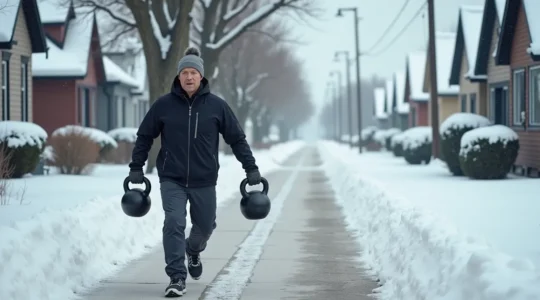
How to Train for “Real Life” Movement Instead of Just Gym Aesthetics?
True fitness isn’t measured by bicep size, but by your ability to navigate a slippery Canadian winter without injury. Isolation exercises like curls fail to prepare you for real-world lifting; the body works as a system, not in parts. Compound…
Read more
Why Joining a Local Club Is More Effective for Longevity Than Quitting Sugar?
The surprising truth is that chronic loneliness can be more damaging to your long-term health than a poor diet or even smoking, making community connection a powerful form of medicine. In Canada, deaths linked to social isolation are estimated to…
Read more
How to Calculate Your “Stress Load” Before You Burn Out?
Burnout is a math problem, not a moral failing. The key is to quantify your ‘allostatic load’—the cumulative wear and tear on your system. Chronic “adaptation cost” to stressors degrades your long-term health, even when you feel productive. Objective data…
Read more
How to Learn a New Skill to Physically Rewire Your Aging Brain
The secret to rewiring your brain after 50 isn’t about passively doing puzzles, but actively embracing complex, multi-sensory challenges that trigger real structural change. Activities that involve social interaction, rich sensory input, and motor skills (like learning a language) are…
Read more
Why Your Doctor Should Be Prescribing Sleep Instead of Pills
The most powerful medicines for reversing chronic conditions like pre-diabetes and hypertension are not found in a pharmacy; they are precise, dosable lifestyle changes. Chronic diseases are not a life sentence but a result of environmental mismatches that can be…
Read more
Why Is Nordic Walking More Effective Than Running for Knee Health?
Nordic walking is not just “walking with poles”; it’s a full-body workout that burns up to 20% more calories than regular walking while actively protecting your joints. Proper pole technique engages up to 90% of your body’s muscles, turning a…
Read more
Your Standing Desk Hurts Your Feet? The Ergonomic Protocols to Fix It
Your standing desk was meant to improve your health, but the foot and back pain you’re feeling is a clear sign that you’ve traded one static posture for another. The root cause is “static loading”—standing still puts immense strain on…
Read more
How to Fix “Tech Neck” Pain Without Spending Hours at the Physio?
Contrary to popular belief, fixing “tech neck” isn’t about stretching a sore neck; it’s about reversing the “postural amnesia” that affects your entire body. Lasting relief comes from active mobility and proprioceptive cues, not passive stretching or braces which can…
Read more
Why Taking Melatonin Pills Might Be Worsening Your Insomnia Long-Term?
Relying on melatonin supplements is often a losing battle because they fail to address the root cause: a mistimed internal body clock. In Canada, melatonin is poorly regulated, with studies showing pill dosages can be wildly inaccurate, disrupting your body’s…
Read more
How to Master the Canadian Winter: A Guide to Mental and Physical Vitality
Thriving through a Canadian winter isn’t about passive endurance; it’s about proactively engineering your personal ecosystem to master the season’s unique physiological challenges. Regulate your body’s clock with timed nutrition and light exposure to combat cravings and fatigue. Master “thermal…
Read more