The key to boundless energy isn’t eating less, but feeding your cells more intelligently.
- A calorie is not just a calorie; its ‘information’ dictates your energy levels and mitochondrial function.
- Critical nutrients like magnesium and omega-3s, often low in Canadian diets, are the true fuel for your mitochondria.
Recommendation: Shift your focus from calorie restriction to adding a rainbow of nutrient-dense, locally-sourced Canadian foods to your plate.
If you feel exhausted despite eating “healthy” or hitting your calorie goals, you are not alone. For decades, the conversation around food has been dominated by a single metric: the calorie. We’ve been taught to view food through the lens of weight management, focusing on restriction and subtraction. But what if this approach is starving the very source of your vitality? The truth is, your body doesn’t just see calories; it sees information. Every bite you take sends a set of instructions to the trillions of microscopic power plants within your cells: your mitochondria.
This is where the paradigm shift from weight loss to energy gain begins. For those struggling with chronic fatigue or athletes seeking peak performance, the key isn’t simply fueling the body, but nourishing the mitochondria. These cellular engines are responsible for converting everything you eat into adenosine triphosphate (ATP), the chemical energy that powers every single function, from thinking and breathing to moving and recovering. When they are sluggish, you are sluggish. The conventional wisdom of “a calorie is a calorie” fails to account for the vastly different metabolic signals sent by different foods.
This guide moves beyond the restrictive mindset. As a functional nutritionist, my focus is on what you can *add* to your diet to supercharge your cellular energy. We will explore how specific nutrients, food pairings, and even meal timing can provide your mitochondria with the precise building blocks and cofactors they need to thrive. Instead of asking “How many calories does this have?”, we will start asking, “What information does this food give my cells?”.
Throughout this article, we will unpack the science behind mitochondrial nutrition, providing you with practical, Canadian-centric strategies. You’ll learn why certain nutrients are non-negotiable for energy, how to build a plate that fights cellular stress, and how to make every meal an opportunity to refuel on a deeply cellular level. Prepare to change the way you think about your food and your energy forever.
Summary: A Guide to Eating for Cellular Energy
- Why Do Your Cells Need Magnesium to Turn Food into Energy?
- How to Eat More Colors to Feed Your Power Plants?
- 100 Calories of Bread vs 100 Calories of Almonds: What Does Your Body See?
- The Low-Fat Mistake That Starves Your Brain of Essential Lipids
- When to Eat Berries: Why Timing Matters for Oxidative Stress?
- How Does Your Body Turn a Sandwich into Pure Chemical Energy?
- Raw or Cooked: Which Vegetables Are Safer for an Inflamed Gut?
- Why Do You Feel Tired Even When You Are Resting?
Why Do Your Cells Need Magnesium to Turn Food into Energy?
Think of your mitochondria as intricate engines and ATP as the fuel they produce. For these engines to even start, they need a spark plug. In your body, that spark plug is magnesium. This essential mineral is a critical “cofactor” involved in over 300 enzymatic reactions, including the final, crucial steps of the Krebs cycle where ATP is generated. Without sufficient magnesium, the entire energy production line slows down, leaving you feeling drained and fatigued, no matter how much “fuel” (food) you consume.
The problem is that many of us are running on a low charge. It’s a widespread issue, and Canada is no exception. In fact, Health Canada data reveals that over 40% of Canadian adults have inadequate magnesium intakes from food alone. Modern farming practices have depleted magnesium from the soil, and a diet high in processed foods further exacerbates this deficiency. This creates a perfect storm for low energy, as our cellular engines are deprived of their essential ignition switch.
Instead of focusing on what to cut out, let’s focus on adding in magnesium-rich powerhouses. Your goal is to intentionally incorporate foods that are naturally abundant in this vital mineral. Think of it as upgrading your cellular spark plugs with premium parts. Here are some excellent Canadian-sourced options to add to your diet:
- Manitoba pumpkin seeds: A small handful (one ounce) provides an impressive 150mg of magnesium.
- Quebec buckwheat: Add this to your breakfast rotation; just a half-cup cooked contains 86mg.
- Prairie lentils: A staple in soups and stews, one cup cooked delivers 71mg.
- British Columbia walnuts: A perfect snack, with a quarter-cup providing 63mg.
- Canadian mineral water: Some brands are naturally high in magnesium, offering an easy way to boost your intake throughout the day.
By consciously adding these foods to your daily routine, you provide your mitochondria with the non-negotiable tool they need to turn your meals into pure, usable energy.
How to Eat More Colors to Feed Your Power Plants?
After securing the essential mineral cofactors, the next step is to protect your cellular engines from the wear and tear of daily operation. The process of energy production naturally creates byproducts called free radicals, which can lead to oxidative stress—essentially cellular rust. This damages mitochondrial DNA and impairs their function. The antidote is a diet rich in antioxidants, and the easiest way to find them is to “eat the rainbow.”
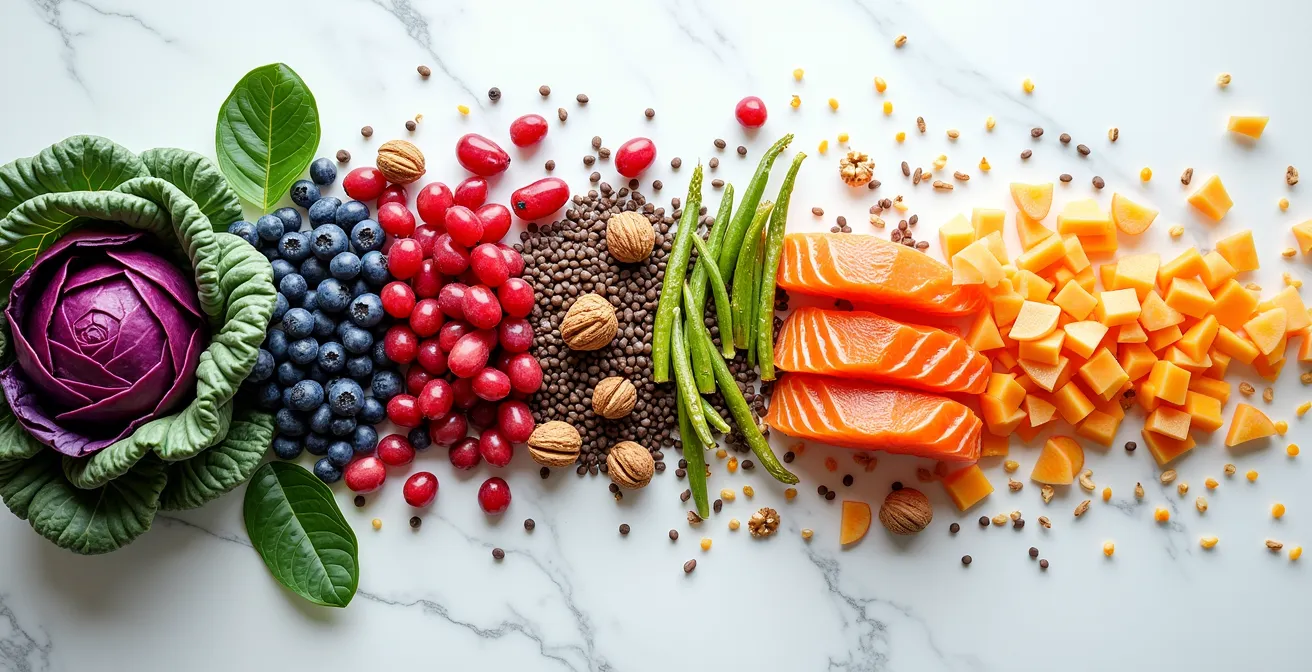
Each colour in fruits and vegetables represents a different family of phytonutrients with unique antioxidant properties. Reds (lycopene), oranges/yellows (carotenoids), greens (chlorophyll), and blues/purples (anthocyanins) all work in synergy to neutralize different types of free radicals, protecting your mitochondria from every angle. This isn’t just about eating your greens; it’s about embracing a full spectrum of plant-based protection. Think of it as assembling a team of specialized defenders for your cells.
The variety of produce grown across Canada provides a fantastic palette for building this protective shield. From the deep red of Quebec cranberries to the vibrant green of New Brunswick fiddleheads, each season offers new opportunities to add more colours to your plate. Particularly powerful are the deep blue and purple foods, rich in anthocyanins. For instance, Canadian wild blueberries, especially from regions like Saguenay-Lac-Saint-Jean, contain significantly higher anthocyanin concentrations than their cultivated counterparts, offering superior antioxidant protection for mitochondrial health.

This vibrant display showcases how you can build a mitochondrial-supportive plate with local produce. The goal is to move beyond a monotonous diet and actively seek out a variety of colours every day. This simple strategy ensures you’re getting a broad spectrum of phytonutrients, each playing a distinct role in shielding your cellular power plants and keeping your energy production clean and efficient.
Don’t get overwhelmed; start by adding one or two new colours to your meals each week. A handful of berries in your oatmeal, some sliced bell peppers with your lunch, or a side of roasted squash with dinner—every colourful addition fortifies your cells.
100 Calories of Bread vs 100 Calories of Almonds: What Does Your Body See?
Here we arrive at the heart of the mitochondrial eating philosophy: a calorie is not just a calorie. The idea that 100 calories of processed carbohydrates have the same effect on your body as 100 calories of nuts is one of the most damaging myths in nutrition. While the energy unit is the same, the metabolic signature—the information and instructions these foods deliver to your cells—is profoundly different.
Refined carbohydrates, like white bread or sugary snacks, are seen by the body as a “crisis.” They cause a rapid spike in blood sugar, forcing the pancreas to release a flood of insulin. This process is highly inflammatory and creates a massive burst of oxidative stress inside the mitochondria, making them work harder and less efficiently. As Dr. Jonathan Vellinga from TCI Medicine notes, “Refined sugars, processed flours… cause inflammation and burden the body’s energy needs, making mitochondria work harder.”
In contrast, 100 calories of almonds provide a completely different set of instructions. They come packaged with fibre, healthy fats, and crucial micronutrients like magnesium and vitamin E. This combination leads to a very slow, stable release of energy, with minimal blood sugar impact. More importantly, the almonds provide the very cofactors and antioxidant compounds that protect mitochondria from damage. Let’s look at a classic Canadian comparison: the humble Timbit versus a handful of British Columbia walnuts.
| Nutrient Factor | 100 cal Timbits (2 pieces) | 100 cal BC Walnuts (14g) |
|---|---|---|
| Magnesium | 4mg | 22mg |
| Vitamin E | 0.1mg | 0.2mg |
| Omega-3 fats | 0g | 1.3g |
| Fiber | 0.4g | 0.9g |
| Blood sugar spike | High (GI: 70+) | Low (GI: 15) |
| Mitochondrial stress | High oxidative burden | Antioxidant protection |
This table starkly illustrates the difference. The Timbits offer empty calories that increase mitochondrial burden, while the walnuts provide a wealth of nutrients that actively support and protect them. The walnuts are not just fuel; they are a support package for your cellular engines.
Choosing nutrient-dense foods over processed ones is the single most powerful decision you can make for your energy levels. It’s not about deprivation; it’s about choosing foods that give your mitochondria the right information to function optimally.
The Low-Fat Mistake That Starves Your Brain of Essential Lipids
For decades, fat was demonized. The low-fat craze led millions to trade healthy fats for refined carbohydrates and sugar, a catastrophic mistake for both brain health and mitochondrial function. Your brain is nearly 60% fat, and the membrane of every single mitochondrion in your body is built from lipids (fats). Depriving your body of high-quality fats is like trying to build a sturdy house with flimsy materials.
Quality fats, particularly omega-3 fatty acids, are not just building blocks; they are functional powerhouses. They make mitochondrial membranes more fluid and permeable, which is essential for the efficient transport of nutrients in and energy out. Stiff, unhealthy membranes made from the wrong kinds of fats (like trans fats or excessive processed vegetable oils) cripple this process. Research consistently demonstrates that omega-3 fats increase energy production in the mitochondria. They are a fundamental component of an energy-centric diet.
Fortunately, Canada’s vast coastlines and agricultural lands offer abundant sources of these crucial fats. The key is to focus on adding in cold-water fish and high-quality plant-based oils. Here are some of the best Canadian sources to incorporate:
- West Coast sockeye salmon: Aim for 2-3 servings per week to get optimal levels of EPA and DHA, the most potent omega-3s.
- Atlantic mackerel: Another cold-water fish that is rich in omega-3s but has a low mercury content.
- Arctic char: A sustainable and delicious Canadian option with a high omega-3 payload.
- Cold-pressed Prairie flaxseed oil: A fantastic plant-based source. Just one tablespoon provides over 7 grams of ALA omega-3s. Use it in salad dressings, not for cooking.
- Canadian canola oil: For cooking, choose cold-pressed Canadian canola oil, which has a much better omega-3 profile than most other common vegetable oils.
Your Action Plan: Auditing Your Fat Intake for Cellular Health
- Identify Sources: List all the primary fats and oils you use for cooking, dressings, and snacking (e.g., butter, olive oil, vegetable oil, margarine).
- Collect Labels: Inventory your pantry. Look at the ingredient lists of your packaged foods (crackers, sauces, granola bars) and identify hidden sources of inflammatory oils like palm oil, soybean oil, or “hydrogenated” fats.
- Check for Coherence: Compare your list against the goal of adding more omega-3s and stable monounsaturated fats. How much of your intake is pro-inflammatory versus anti-inflammatory?
- Assess Quality: For your primary oils (like olive or canola), are they “cold-pressed” or highly refined? Quality processing preserves the beneficial compounds.
- Create an Integration Plan: Identify one inflammatory fat to reduce (e.g., margarine) and one high-quality omega-3 source to add this week (e.g., a serving of salmon or a tablespoon of flax oil in a smoothie).
Embracing healthy fats is essential for building resilient, high-functioning mitochondria. It’s time to let go of the fear of fat and start leveraging its power for your brain and your energy.
When to Eat Berries: Why Timing Matters for Oxidative Stress?
You now understand the importance of what you eat—focusing on nutrient cofactors, colourful antioxidants, and quality fats. But the next level of mitochondrial nutrition introduces another dimension: timing. It’s not just *what* you eat, but *when* you eat it, that can influence your body’s ability to manage oxidative stress. This is particularly true for antioxidant-rich foods like berries.
The very act of digestion and metabolism—turning food into energy—is an oxidative process that generates free radicals. A large, heavy meal, especially one high in processed fats and sugars, can create a “post-meal firestorm” of oxidative stress, overwhelming your mitochondria. This is often why you feel sluggish and tired after a big dinner. Your cellular power plants are busy dealing with the damage, rather than efficiently producing energy.
This is where strategic timing comes in. You can use antioxidant-rich foods to preemptively quench this fire. Canadian research highlights an effective strategy: consuming berries, like the nutrient-dense Saskatoon berry, either with your meal or shortly after. This tactic helps neutralize the free radicals produced during digestion right at the source. Instead of trying to clean up the damage later, you’re providing your body with an immediate team of firefighters.

Think of it as a defensive move. The deep purple pigments in these Saskatoon berries represent a high concentration of anthocyanins, powerful antioxidants ready to go to work. Having them present in your system during the digestive process offers real-time protection to your mitochondria, lessening the metabolic burden of your meal and allowing for cleaner, more efficient energy production.
This doesn’t have to be complicated. It can be as simple as having a small bowl of mixed Canadian berries for dessert, adding them to a post-dinner smoothie, or simply eating them alongside the main course. It’s a small adjustment that can make a big difference in how you feel after you eat.
How Does Your Body Turn a Sandwich into Pure Chemical Energy?
The process of turning a meal into ATP is a complex biochemical assembly line. A simple sandwich, for example, is broken down into its core components: carbohydrates into glucose, proteins into amino acids, and fats into fatty acids. These molecules then enter the mitochondria to be run through the Krebs cycle and the electron transport chain. For this assembly line to run smoothly, it requires not only the main ingredients but also a host of specialized tools and workers—vitamins and antioxidants.
As nutritional therapist Henrietta Norton explains, two special antioxidants are crucial for this process: alpha-lipoic acid (ALA) and Coenzyme Q10 (CoQ10). In her research for Wild Nutrition, she highlights that, “Both of these antioxidants help with energy, protect the mitochondria.” CoQ10 is particularly vital, acting like a shuttle bus that transports electrons along the energy production line. Without enough CoQ10, the entire process grinds to a halt.
So, how can you transform an ordinary sandwich from a simple meal into a mitochondrial supercharger? By being intentional about every single ingredient you add. It’s about building your meal with energy cofactors in mind. Instead of just grabbing two slices of bread and some processed meat, you can construct a sandwich that actively supports ATP production.
Here’s how to optimize your sandwich for mitochondrial energy:
- Choose sprouted grain bread: Sprouting grains unlocks nutrients, making them more bioavailable. Sprouted bread often contains more B vitamins, which are essential cofactors for energy conversion.
- Add magnesium-rich greens: A layer of fresh spinach or arugula isn’t just for texture; it provides the magnesium spark plug your mitochondria desperately need.
- Include quality protein: Opt for grass-fed beef, organic chicken, or wild-caught salmon. These proteins provide the building blocks for mitochondrial repair and often contain higher levels of CoQ10.
- Layer with colourful vegetables: Slices of tomato and bell pepper add more than just flavour; they deliver a dose of antioxidants like lycopene and vitamin C to protect your cells during metabolism.
- Skip the processed meats: Deli meats are often high in nitrates and preservatives that increase oxidative stress and place an unnecessary burden on your mitochondria.
This approach transforms a simple lunch into a strategic act of self-care. You’re not just satisfying hunger; you’re consciously providing your cellular machinery with everything it needs to perform at its best.
Raw or Cooked: Which Vegetables Are Safer for an Inflamed Gut?
A healthy gut is the gateway to healthy mitochondria. The gut-mitochondria axis is a critical connection; inflammation in the digestive tract can directly impair energy production throughout the body. For many people with chronic fatigue or autoimmune conditions, a primary source of this inflammation comes from difficulty digesting raw foods. While a raw kale salad is packed with nutrients, its tough, fibrous structure can be incredibly irritating to a sensitive, inflamed gut lining.
This creates a paradox: you need the nutrients from vegetables to fuel your mitochondria, but eating them raw can make your symptoms worse. The solution lies not in avoiding vegetables, but in preparing them in a way that makes their nutrients easy to absorb while minimizing digestive stress. For a compromised gut, cooked is often safer and more beneficial than raw. Gentle cooking methods break down the tough cellulose fibers that can act like sandpaper on an inflamed gut, unlocking the nutrients within.
The key is to use methods that preserve the most nutrients. Canadian research suggests that gentle steaming is one of the best approaches for root vegetables. This method softens the fibres in Canadian-grown carrots, parsnips, and beets, making them easy to digest while preserving many of the heat-stable, mitochondrial-supportive nutrients they contain. Roasting and slow-cooking are also excellent options. The goal is to make the food do less work, so your body can focus on absorption and energy production, not on a painful digestive battle.
Another powerful strategy for an inflamed gut is fermentation. Fermented vegetables like traditional sauerkraut or beet kvass are essentially “pre-digested” by beneficial bacteria. This process not only makes the nutrients incredibly bioavailable but also populates your gut with the very probiotics needed to heal the gut lining and reduce inflammation. Choosing well-cooked Canadian root vegetables and winter squashes, or adding a tablespoon of locally made sauerkraut to your meal, provides nutrients in a form your body can easily use.
By tailoring your vegetable preparation to the state of your gut, you create a foundation of digestive peace that allows your mitochondria to finally get the fuel they need without the inflammatory backlash.
Key takeaways
- Shift your focus from counting calories (quantity) to evaluating food as ‘information’ for your cells (quality).
- Prioritize adding nutrient cofactors like magnesium and quality omega-3 fats, which are fundamental for the mitochondrial energy assembly line.
- Embrace the “Rainbow Mandate”: eating a wide variety of colourful, antioxidant-rich produce to protect your cellular power plants from oxidative stress.
Why Do You Feel Tired Even When You Are Resting?
One of the most frustrating experiences is feeling bone-tired even when you’ve had a full night’s sleep. You’re resting, but your body isn’t recharging. This deep, persistent fatigue often points to a problem that goes beyond diet alone and is deeply tied to our environment. For Canadians, one of the biggest culprits is the long, dark winter and the resulting deficiency in the “sunshine vitamin”: Vitamin D.
Vitamin D functions more like a hormone than a vitamin, and it plays a direct role in mitochondrial function. As a landmark study in Nature Communications Biology revealed, mitochondrial energy production is impaired in vitamin D-deficient subjects. When Vitamin D levels are low, the ability of our muscle cells’ mitochondria to generate ATP is significantly reduced. You can be eating a perfect diet, but without adequate Vitamin D, your cellular power plants simply cannot operate at full capacity.
This is a major concern in Canada. Due to our northern latitude, the sun’s rays are too weak from October to April for our skin to synthesize Vitamin D. The consequences are clear in national data. Statistics Canada shows that the prevalence of Vitamin D deficiency among Canadians more than doubles during the winter months. This seasonal drop aligns perfectly with the widespread reports of winter lethargy and fatigue. Your exhaustion isn’t just in your head; it’s in your cells.
Combating this requires a proactive approach during the fall and winter. While some foods like fatty fish and fortified milks contain Vitamin D, supplementation is generally necessary for most Canadians to maintain adequate levels. It’s also crucial to ensure you have enough magnesium, as magnesium is required to activate Vitamin D in the body. They work as a team. Addressing this environmental and nutritional gap is often the missing piece of the puzzle for overcoming persistent, resting fatigue.
By addressing your Vitamin D status in conjunction with a mitochondrial-supportive diet, you give your body the tools it needs to generate energy effectively, regardless of the season. Start by speaking with your healthcare provider about getting your levels tested and determining an appropriate supplementation strategy for you.
Frequently Asked Questions on Eating for Mitochondrial Health
Why does cooking method matter for inflamed gut conditions?
Gentle cooking methods like steaming or slow-cooking break down tough fibers that can irritate an inflamed gut while preserving heat-stable nutrients needed for mitochondrial function.
Are fermented vegetables better than raw or cooked?
Fermented vegetables like sauerkraut or beet kvass are ‘pre-digested’ by beneficial bacteria, making nutrients more bioavailable while providing probiotics that heal the gut lining.
Which Canadian vegetables are best for sensitive guts?
Well-cooked Canadian root vegetables (carrots, parsnips, turnips) and winter squashes are generally well-tolerated and provide nutrients that support both gut healing and energy production.