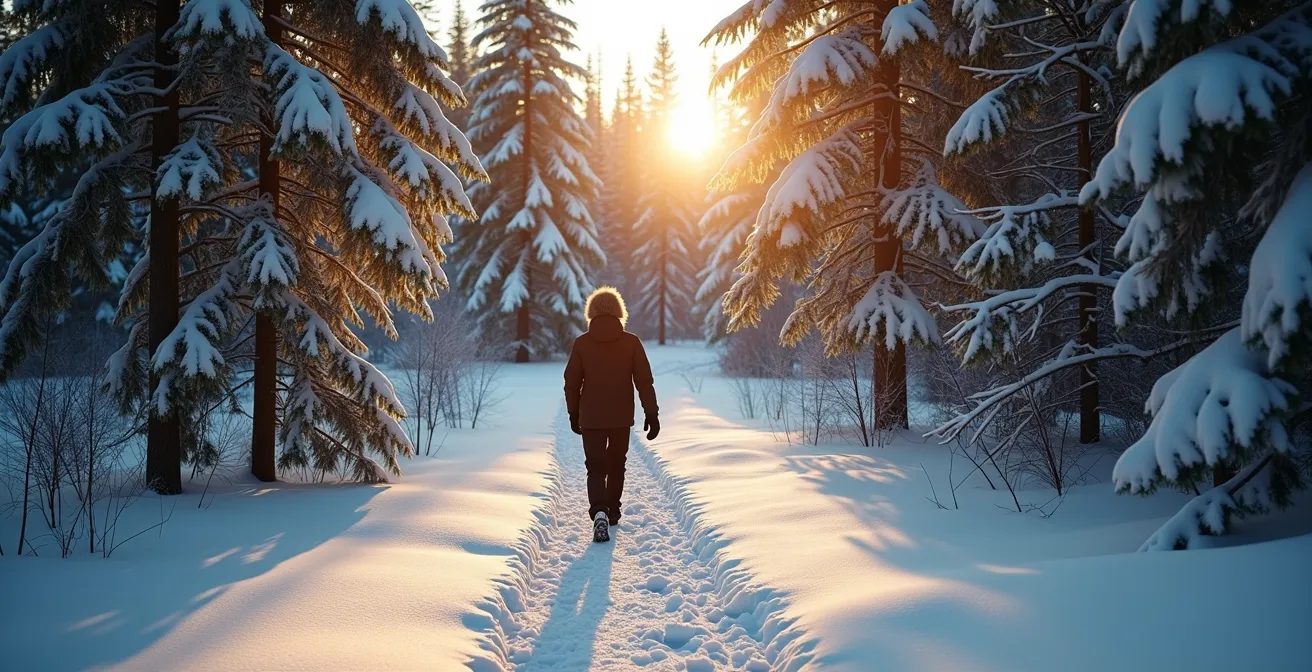
Thriving through a Canadian winter isn’t about passive endurance; it’s about proactively engineering your personal ecosystem to master the season’s unique physiological challenges.
- Regulate your body’s clock with timed nutrition and light exposure to combat cravings and fatigue.
- Master “thermal engineering” with strategic layering to exercise safely in extreme cold.
- Treat your home as a controlled environment, managing humidity and air filtration to reduce illness.
Recommendation: Start by purchasing a simple hygrometer. Understanding and controlling your home’s humidity is the first, most impactful step in engineering your winter wellness.
The first truly bitter wind of November hits differently in Canada. It’s a signal. The days of effortless vitality are numbered, and the 4 PM sunsets begin their psychological assault. For many residents of Canada, this marks the start of a five-month-long battle against the ‘winter blues,’ a period characterized by low energy, persistent cravings, and a creeping desire to hibernate. The standard advice is familiar to all of us: stock up on vitamin D, try to stay active, and see your friends. While well-intentioned, this advice often feels inadequate against the sheer scale of a Canadian winter.
These tips treat the symptoms, not the cause. They fail to address the fundamental question: why does our physiology react so strongly to prolonged darkness and cold? The fatigue, the urge for sugary foods, the vulnerability to illness—these are not character flaws. They are predictable biochemical responses to a drastically changed environment. What if the key to not just surviving, but thriving, wasn’t about resisting winter, but about understanding and proactively managing its specific effects on our bodies and homes?
This guide abandons the platitudes. Instead, we will adopt the mindset of an engineer, dissecting the core challenges of the Canadian winter and implementing targeted solutions. We will explore the science behind why darkness triggers cravings and how to counteract it with nutrition. We’ll delve into the physics of staying warm during a -20°C run, the truth about vitamin D absorption, and why the air inside your home might be your biggest health liability. It’s time to stop enduring winter and start mastering it from the inside out.
To navigate this journey from surviving to thriving, this article is structured to tackle each challenge systematically. The following summary outlines the key areas we will explore to help you build a comprehensive winter wellness strategy.
Summary: A Guide to Mental and Physical Vitality Through the Canadian Winter
- Why Does Darkness at 4 PM Trigger Sugar Cravings and Fatigue?
- How to Dress for a -20°C Run Without Freezing or Overheating?
- Drops or Pills: Which Vitamin D Formula Absorbs Best in Winter?
- The “Hibernation” Trap: Why staying In All Winter Ruins Your Immune System
- Humidifier or Purifier: Which Device Prevents Winter Sinus Infections?
- Why Is the “Sunshine Vitamin” Your First Defense Against Autoimmunity?
- Why Does Dry Winter Air Make Viruses Travel Further in Your House?
- How to Practice Forest Bathing if You Don’t Have a Forest Nearby?
Why Does Darkness at 4 PM Trigger Sugar Cravings and Fatigue?
When the sun sets before the end of the workday, it’s not just your mood that plummets; your entire biochemistry shifts. The early onset of darkness disrupts your body’s circadian rhythm, the internal clock that governs sleep, energy, and hormone production. This triggers an increase in melatonin (the sleep hormone) and a corresponding decrease in serotonin, a neurotransmitter crucial for mood and appetite control. This drop in serotonin is the primary culprit behind the intense cravings for carbohydrates and sugar, as your brain seeks a quick, albeit temporary, boost.
This phenomenon is a significant public health issue in Canada. In fact, research from the McMaster Optimal Aging Portal reveals that approximately 1 in 4 Canadians experience symptoms of seasonal affective disorder (SAD), with these cravings and fatigue being hallmark signs. Instead of fighting a losing battle of willpower against these powerful biological urges, the solution is to work with your body’s clock through a practice known as chrononutrition.
This involves strategically timing your meals to support your body’s needs throughout the shortened daylight hours. By front-loading your day with complex carbohydrates and protein and having a lighter meal in the evening, you can stabilize your blood sugar and serotonin levels. This proactive nutritional strategy helps mitigate the hormonal chaos induced by the darkness, reducing the intensity of cravings and providing sustained energy, even when the sun disappears at 4 PM.
How to Dress for a -20°C Run Without Freezing or Overheating?
Exercising outdoors in the Canadian winter, especially at -20°C, is not about toughness; it’s about thermal engineering. The biggest mistake runners make is overdressing, which leads to sweating. Once your base layers are wet, the moisture rapidly cools and freezes, creating a dangerous situation. The goal is to be slightly cool when you start, knowing your body will generate significant heat within minutes. The key to achieving this delicate balance is a three-layer system designed for moisture management and insulation.

As seen in this preparation for a winter run, the system begins with a moisture-wicking base layer made of merino wool or synthetic fabric that pulls sweat away from your skin. The second is an insulating mid-layer, like a fleece, which traps air to keep you warm. The final piece is a breathable, wind-resistant outer shell that protects you from the elements without trapping moisture. This system allows you to add or remove layers to precisely regulate your temperature. Protecting your extremities—head, hands, and feet—is also non-negotiable, as they are most susceptible to frostbite.
Furthermore, the type of cold you face in Canada is not uniform. The “thermal engineering” required for a dry, -30°C day in the Prairies is different from a damp, -15°C day in Eastern Canada. Dry cold requires a focus on wind protection over heavy insulation, while damp cold penetrates deeper, demanding better waterproofing and more insulation to stay warm.
This table from a regional analysis highlights how your layering strategy should adapt to the specific type of Canadian cold you’re facing.
| Region | Cold Type | Key Layer Priority | Special Considerations |
|---|---|---|---|
| Prairie Provinces | Dry Cold (-30°C) | Moisture-wicking base | Less insulation needed, focus on wind protection |
| Eastern Canada | Damp Cold (-15°C) | Waterproof shell | More insulation required despite warmer temps |
| Coastal BC | Wet Cold (0°C) | Breathable waterproof | Avoid cotton completely, quick-dry materials essential |
Drops or Pills: Which Vitamin D Formula Absorbs Best in Winter?
During the long Canadian winter, the sun is too low in the sky for our skin to synthesize Vitamin D, making supplementation non-negotiable. But not all supplements are created equal. The central question—drops or pills—comes down to a simple matter of biochemistry: Vitamin D is a fat-soluble vitamin. This means it requires fat for your body to absorb it properly. This is the single most important factor when choosing a formula.
Many Vitamin D pills are dry tablets, containing the vitamin in a powder form without a fatty carrier. While convenient, their absorption can be less efficient, especially if taken on an empty stomach. In contrast, Vitamin D drops are typically suspended in an oil base, such as MCT (medium-chain triglyceride) oil or olive oil. This pre-dissolved format effectively mimics the natural way your body would process a fat-soluble nutrient, providing a carrier vehicle that significantly enhances absorption directly in the small intestine.
For this reason, many Canadian health experts lean towards oil-based drops for optimal winter supplementation. A few drops under the tongue or added to a meal with some healthy fat (like avocado or yogurt) ensures the vitamin has the partner it needs to be properly utilized by your body. When it comes to dosage, it’s crucial to follow official guidance, as both deficiency and excess can pose health risks. For most Canadian adults, the recommendation is clear. For instance, Health Canada’s 2024 updated guidelines suggest 600-800 IU daily to maintain adequate levels during the sun-deprived months.
The “Hibernation” Trap: Why staying In All Winter Ruins Your Immune System
The instinct to retreat indoors and minimize social contact during the harsh winter months—the “hibernation trap”—feels natural, but it’s one of the most detrimental things you can do for your immune health. While avoiding crowds seems like a good way to dodge germs, chronic social isolation and a sedentary lifestyle actively weaken your body’s defenses. Your immune system, much like a muscle, requires regular, moderate stressors to stay strong and responsive. Social interaction and gentle exposure to the cold act as forms of eustress—positive stress—that help calibrate and strengthen your immune function.
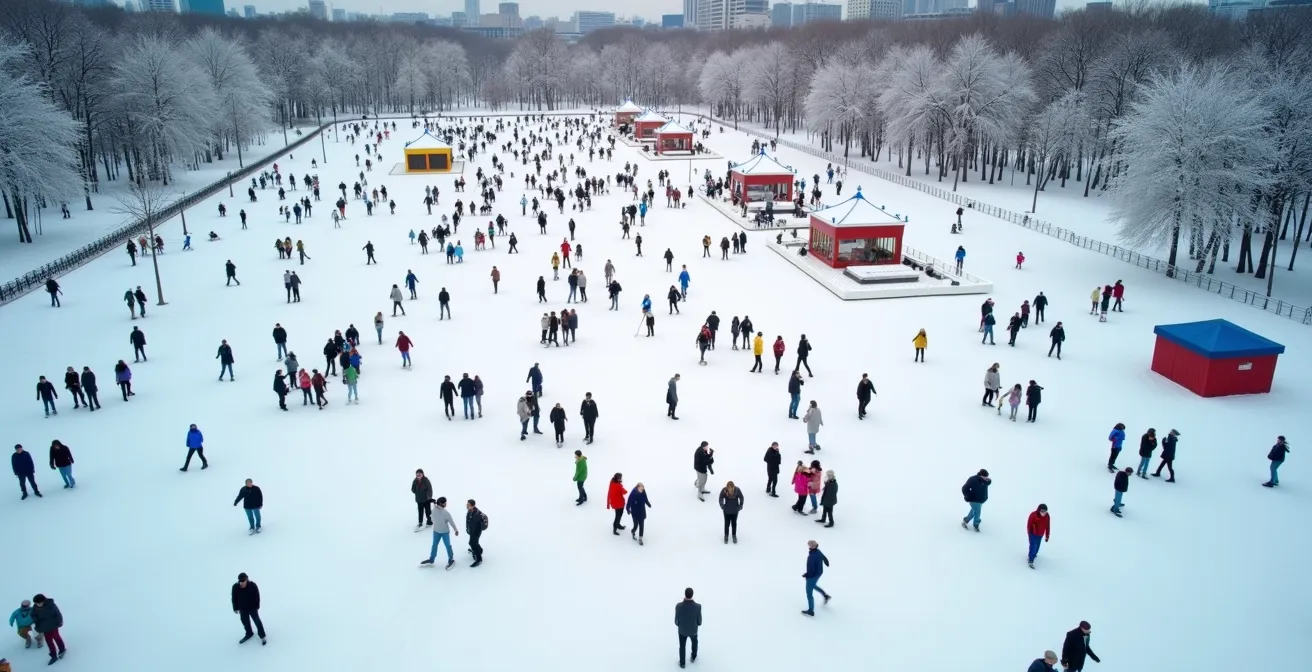
Staying active and connected forces your body to adapt, improves circulation, and reduces the chronic inflammation associated with loneliness and a sedentary state. Embracing winter means finding reasons to get out, not excuses to stay in. This could mean joining community activities, like the vibrant winter festivals that are a staple of Canadian culture, or simply scheduling regular walks with a friend. These activities provide not only physical benefits but also crucial psychological ones, combating the isolation that can compromise your mental and immune well-being.
The key is to be intentional about scheduling social connection. Don’t wait for it to happen; build it into your winter routine just as you would any other health practice. Proactively seeking out community and activity is your best defense against the physical and mental toll of a long winter.
Your Canadian Winter Social Connection Plan
- Join a local community center’s weekly snowshoe or cross-country ski group to combine activity and social time.
- Start a rotating ‘supper club’ with neighbors, setting a recurring date every two weeks to ensure consistent connection.
- Mark your city’s winter festival on the calendar (e.g., Ottawa’s Winterlude, Quebec’s Winter Carnival) and plan to attend.
- Sign up for an indoor sports league at your local recreation center to maintain activity levels and meet new people.
- Schedule non-negotiable weekly video calls with distant family or friends to maintain long-distance bonds.
Humidifier or Purifier: Which Device Prevents Winter Sinus Infections?
When you turn on the furnace in your Canadian home, you begin a process that dries out the indoor air, often causing humidity levels to plummet. This ultra-dry air is a primary cause of winter health issues, as it irritates your nasal passages, dries out your mucous membranes, and makes you more susceptible to sinus infections and viruses. The solution lies in engineering your indoor ecosystem, but the right tool—a humidifier or an air purifier—depends entirely on your home’s specific environment.
A humidifier’s job is to add moisture back into the air, aiming for an optimal indoor humidity level of 40-50%. A HEPA purifier’s job is to remove airborne particles like dust, dander, and viruses. A case study on Canadian Prairie homes, where central heating can drop humidity to as low as 15%, found that homes maintaining 40-50% humidity reported 30% fewer upper respiratory infections. The first and most essential tool is a hygrometer, a simple device to measure your home’s humidity. This data will tell you what you need.
The choice between devices is highly dependent on your housing type. Modern, airtight condos often trap pollutants and may only need a purifier, while older, drafty houses lose moisture quickly and benefit most from a humidifier. Homes with forced-air heating systems, common across Canada, circulate both dry air and dust, often making a combination of both devices the ideal solution for a truly healthy indoor environment.
This simple guide, based on common Canadian housing types, can help you determine the best approach for engineering your home’s air quality.
| Housing Type | Primary Device | Target Humidity | Secondary Considerations |
|---|---|---|---|
| Modern Condo (Airtight) | HEPA Purifier | 35-40% | Risk of mold with excess humidity |
| Older Home (Drafty) | Humidifier | 40-50% | Natural air exchange reduces purifier need |
| Forced-Air Heating | Both Recommended | 40-45% | System circulates dust, needs humidity boost |
Why Is the “Sunshine Vitamin” Your First Defense Against Autoimmunity?
In Canada, Vitamin D is often discussed in the context of bone health and mood. However, its most critical function may be as a powerful modulator of the immune system. Far from being just a vitamin, it acts as a hormone that plays a key role in regulating immune responses and preventing the body from attacking itself—the hallmark of autoimmune diseases like multiple sclerosis (MS). This is particularly relevant for Canadians, as Canada has one of the highest rates of MS in the world, a fact strongly linked to our northern latitude and lack of sun exposure.
Scientific evidence increasingly shows a direct link between Vitamin D levels and autoimmune risk. For instance, a landmark 2024 meta-analysis found that people with vitamin D deficiency have a 54% higher risk of developing MS. The vitamin helps promote regulatory T-cells, which are the “peacekeepers” of the immune system, and suppresses the inflammatory processes that drive autoimmune attacks. For those living in a high-risk country like Canada, ensuring adequate Vitamin D levels isn’t just about feeling better; it’s a primary defensive strategy against a life-altering disease.
This connection is a major focus of Canadian medical research. As a leading expert in the field highlights, this is not a global issue but one of particular importance for us.
These findings are especially important in countries at higher latitudes such as Canada, which do not receive adequate sun exposure in the winter months to produce vitamin D.
– Dr. Brent Richards, McGill University MS Research Study
Therefore, winter supplementation in Canada is more than just a wellness trend; it is a crucial public health measure. It is a proactive step to help regulate an immune system that is under particular strain due to our unique geographical and environmental conditions.
Why Does Dry Winter Air Make Viruses Travel Further in Your House?
We often blame the cold for winter illnesses, but the real culprit is frequently the dry air inside our homes. When we heat our houses, the relative humidity plummets. This creates an environment where airborne viruses, like influenza and coronaviruses, can thrive. The physics is simple: in humid air (40-60% humidity), the respiratory droplets we exhale are larger and heavier, causing them to fall to the ground quickly. In dry air, these droplets evaporate, becoming smaller, lighter “droplet nuclei” that can stay airborne for hours and travel much further, easily spreading from room to room.
This effect is compounded by the fact that dry air weakens our body’s natural defenses. The mucous membranes in our nose and throat are a critical first line of defense, trapping pathogens before they can enter our system. Dry air compromises this mucus barrier, making it less effective and leaving us more vulnerable to infection. Research from the NIH confirms this dual threat, showing how dry winter air both enhances virus transmission and impairs our innate immunity.
This is a major concern in Canadian multi-unit dwellings with shared forced-air heating systems. A study focusing on apartment buildings in cities like Toronto and Montreal found that simply maintaining 40-50% humidity could reduce airborne virus transmission by up to 40%. The study also emphasized that upgrading furnace filters to a MERV 11-13 rating is another critical intervention to capture these airborne viral particles. Engineering your indoor air quality is therefore a direct and powerful way to reduce your risk of getting sick all winter.
Key Takeaways
- Biochemical Regulation: Combat winter fatigue and cravings by timing your meals to support your body’s natural circadian rhythm, emphasizing complex carbs and protein during daylight hours.
- Proactive Movement: Master the art of layering (“thermal engineering”) to make outdoor exercise possible and safe, even in extreme cold, preventing the immune-compromising effects of a sedentary winter.
- Indoor Ecosystem Control: Actively manage your home environment by maintaining indoor humidity between 40-50% and using high-rated air filters (MERV 11-13) to significantly reduce airborne virus transmission.
How to Practice Forest Bathing if You Don’t Have a Forest Nearby?
The concept of Shinrin-yoku, or forest bathing, is a Japanese practice of immersing oneself in nature to reduce stress and improve well-being. It’s a powerful tool, but for many urban Canadians in the dead of winter, a lush forest is inaccessible. The good news is that the core principle of forest bathing is not about the forest itself, but about deliberate sensory engagement with the natural world, wherever you can find it. You can practice this form of mindfulness even in a city park or along a frozen riverbank.
The key is to shift your focus from “exercising” to “experiencing.” Instead of tracking your pace or distance, slow down and engage all your senses. Listen for the distinct sound of a chickadee’s call or the crunch of snow under your boots. Feel the sharp, clean air on your skin. Observe the intricate patterns of frost on a branch or the way the low winter sun casts long shadows. This practice of sensory substitution allows you to reap the mental health benefits of nature connection even without a dense woodland.
Major Canadian cities offer surprisingly rich opportunities for urban winter bathing. The goal is to find pockets of nature and interact with them intentionally. Even bringing nature indoors, such as by forcing willow branches to bloom in a vase, can provide a valuable sensory connection to the natural world during the longest months of winter.
Your Urban Winter Bathing Guide for Canadian Cities
- In Montreal’s Mount Royal Park, follow the Olmsted Path to find quiet ravines and old-growth trees away from the crowds.
- In Toronto’s High Park, seek out the still and quiet oak savannah area to listen for the sounds of winter wildlife.
- In Edmonton’s River Valley, access the extensive trail system along the North Saskatchewan River for a feeling of wilderness within the city.
- In Vancouver’s Stanley Park, visit the lesser-known Beaver Lake area for a true forest immersion experience close to downtown.
- Focus on sensory engagement: notice the crunch of snow, listen for bird calls, and feel the cold air on your skin.
Mastering the Canadian winter is an active process of understanding, adapting, and engineering. By addressing the core physiological and environmental challenges head-on—from regulating your body’s clock with food to controlling the air you breathe at home—you can transform the season from a period of endurance into a time of vitality and resilience. The first step is to choose one area and begin.