
The persistent, unexplained fatigue you’re feeling may not be “just stress,” but a direct physiological response to hormone-disrupting chemicals common in Canadian households.
- Endocrine Disrupting Chemicals (EDCs) like phthalates and BPA interfere with your body’s hormonal crosstalk, impacting everything from energy levels to metabolism.
- Simply choosing “BPA-free” or “natural” isn’t enough; many replacement chemicals have similar hormonal effects, and marketing terms are often unregulated in Canada.
Recommendation: Shift your focus from simple avoidance to a two-pronged strategy: making targeted product swaps and actively supporting your liver’s natural detoxification pathways with specific foods.
You follow a healthy diet, you try to get enough sleep, and you manage your stress. Yet, a deep, persistent fatigue lingers, a brain fog that won’t lift. You’ve done the blood tests, and your doctor tells you everything looks “normal.” This frustrating experience is incredibly common and points to a factor often overlooked in conventional wellness: the subtle, daily impact of endocrine-disrupting chemicals (EDCs) on your body’s delicate hormonal balance.
These chemicals, found in everything from your shampoo to your food containers, can mimic, block, or otherwise interfere with your natural hormones. The conventional advice is often a vague “avoid toxins” or “buy organic.” But this doesn’t address the core of the problem. What if the key wasn’t just avoiding these compounds, but understanding their specific effects and actively bolstering your body’s ability to clear them? This is not about a radical, impractical overhaul of your life. It’s about targeted, evidence-based changes that disrupt the disruptors.
This guide moves beyond the generic advice. We will explore the scientific mechanisms behind how these chemicals affect your energy, thyroid, and metabolic health. We’ll decode labels, debunk common “clean” product myths with a Canadian focus, and provide a clear, actionable roadmap to reduce your exposure and support your body’s resilience. You will learn not just what to avoid, but how to build a defense system against the unavoidable exposures of modern life.
To help you navigate this crucial topic, this article breaks down the science and solutions into manageable parts. The following summary outlines the key areas we will cover, from identifying specific chemicals to implementing natural support strategies tailored for you in Canada.
Summary: Why Are Endocrine Disruptors in Your Bathroom Cabinet Affecting Your Energy?
- Why Do Phthalates in Shampoo Mess With Your Hormonal Balance?
- How to Replace the “Dirty Dozen” Hormonal Disruptors in Your Home?
- Glass or BPA-Free Plastic: Which Container Is Truly Safe for Leftovers?
- The “Just Stress” Diagnosis That Masks Thyroid Dysfunction in 40% of Women
- How to Support Your Liver to Clear Excess Estrogen Naturally?
- Therapeutic Grade or Synthetic: How to Spot Fake Oils at the Store?
- Why Does Belly Fat Lower Testosterone in Men?
- Which Essential Oils Actually Have Clinical Evidence for Anxiety?
Why Do Phthalates in Shampoo Mess With Your Hormonal Balance?
That “fresh scent” in your favourite shampoo or lotion could be a primary source of your hormonal woes. Phthalates are a class of industrial chemicals used to make plastics more flexible and, more insidiously, to make fragrances last longer. They are not chemically bound to the products they are in, meaning they leach out easily, getting absorbed through your skin and into your bloodstream. The problem is so widespread that a Canadian Health Measures Survey found that over 90% of Canadians tested positive for phthalate metabolites in their urine. This isn’t a niche issue; it’s a national exposure reality.
Once inside your body, these chemicals create chaos in your endocrine system. They are potent xenoestrogens, meaning they mimic estrogen, contributing to a state of estrogen dominance. More alarmingly, they directly interfere with your thyroid. A recent 2024 study of pregnant women found a significant association between phthalate exposure and lowered active thyroid hormones (T3 and T4) alongside increased Thyroid-Stimulating Hormone (TSH). This is a classic pattern of subclinical hypothyroidism, which directly translates to symptoms like fatigue, weight gain, and low mood—the very symptoms often dismissed as “just stress.”
The challenge for Canadian consumers is that phthalates are often hidden. Because of trade secret laws, companies don’t have to disclose the individual chemicals in their “fragrance” or “parfum” blends. This generic term on an ingredient list becomes a Trojan horse for phthalates. To protect your hormonal health, you must become a label detective. Look for products explicitly labelled “phthalate-free” or those scented only with pure essential oils. The most powerful step is to avoid any product with the catch-all terms “fragrance,” “parfum,” or “aroma” on the ingredient list unless the company transparently discloses what is in that blend.
How to Replace the “Dirty Dozen” Hormonal Disruptors in Your Home?
Confronting the sheer number of endocrine disruptors can feel overwhelming. The key is not to throw everything out at once, but to adopt a strategic replacement plan. Prioritizing your swaps based on exposure level is the most effective and budget-friendly approach. The most critical products to address are “leave-on” products—body lotions, face creams, deodorants, and cosmetics. These remain on your skin for hours, allowing for a much higher rate of chemical absorption compared to “wash-off” products like shampoo or soap.
Start by auditing your daily routine. What products sit on your skin the longest? Target these first. Swapping your daily body lotion for a clean, phthalate-free alternative from a trusted Canadian brand will have a greater impact than changing an occasionally used hand soap. This prioritizes reducing your total “body burden”—the cumulative amount of chemicals stored in your tissues.
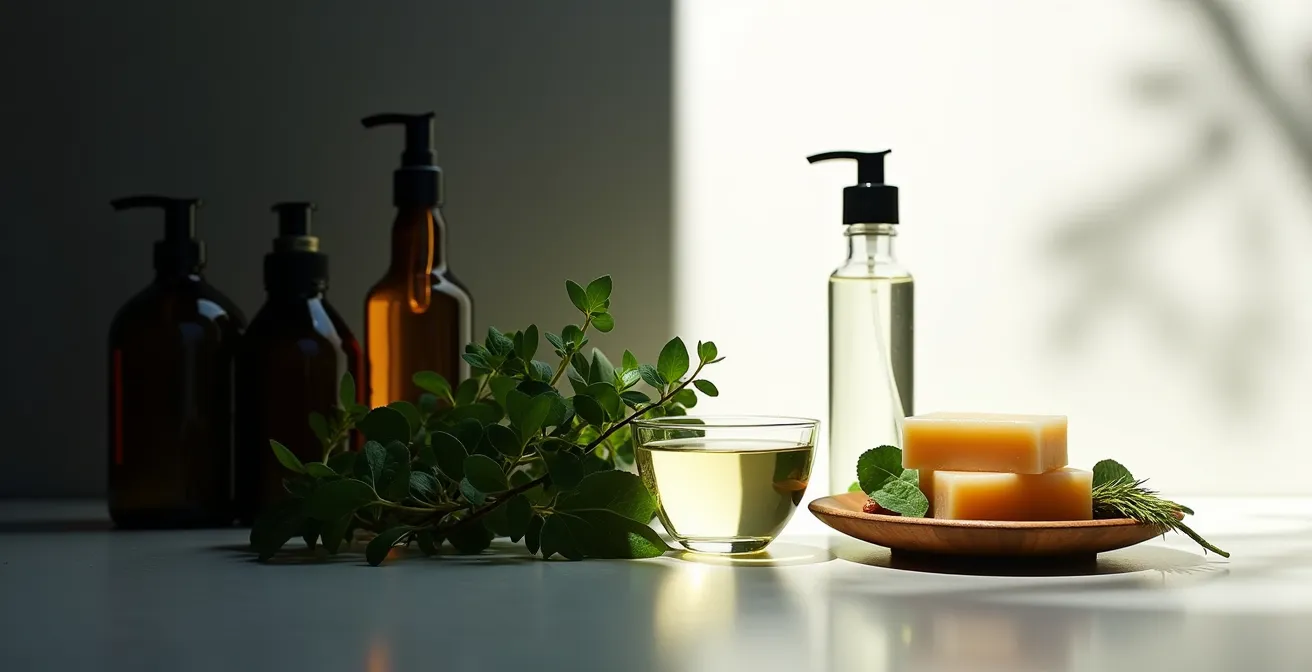
As the image above illustrates, this transition is about moving towards simplicity and transparency. Look for brands that pride themselves on short, understandable ingredient lists. The following table provides a clear priority guide for making swaps, including examples of Canadian companies leading the way in non-toxic personal care.
| Priority Level | Product Type | Why Prioritize | Canadian Alternatives |
|---|---|---|---|
| HIGH (swap first) | Leave-on products: body lotion, deodorant, face cream | Longer skin contact = higher absorption | Green Beaver Company, Rocky Mountain Soap Co. |
| MEDIUM | Wash-off products: shampoo, body wash, hand soap | Brief contact but daily use | Attitude Living, Oneka Elements |
| LOW | Occasional use: hair dye, nail polish | Infrequent exposure | Pure Anada, Zorah Biocosmetics |
Glass or BPA-Free Plastic: Which Container Is Truly Safe for Leftovers?
One of the most significant sources of EDC exposure comes from our kitchens, specifically from how we store our food. Bisphenol-A (BPA), a potent xenoestrogen, was famously used to make hard, clear plastics. Public pressure led to its removal from many products, and the market flooded with “BPA-free” alternatives. However, this marketing victory created a false sense of security. The chemicals used to replace BPA, such as Bisphenol-S (BPS) and Bisphenol-F (BPF), are often just as, if not more, hormonally active.
This isn’t speculation; it’s documented science. In fact, a 2011 study revealed that some BPA-free products released more endocrine-active chemicals than the original BPA-containing plastics, especially when exposed to heat (like in a microwave or dishwasher) or UV light. The label “BPA-free” says nothing about the safety of the replacement chemicals. The only truly safe and inert material for food storage, especially for hot or acidic foods, is glass. Stainless steel is also an excellent option. Any form of plastic, regardless of its marketing claims, poses a risk of chemical leaching.
Making the switch requires a change in habits. It means never microwaving food in any plastic container, letting hot leftovers cool completely before storing them, and gradually replacing your collection of plastic tubs with glass or stainless steel alternatives. This single kitchen habit change can dramatically reduce your daily ingestion of xenoestrogens, giving your endocrine system a much-needed break.
Your Safe Food Storage Audit: A 5-Point Checklist
- Identify High-Risk Containers: Inventory all your plastic food storage. Pay special attention to any that are old, scratched, cloudy, or have a recycling code of #3 or #7, as these are more likely to leach chemicals.
- Assess Your Habits: For one week, track how often you microwave in plastic, put hot food in plastic, or store acidic foods (like tomato sauce) in plastic. This is your baseline exposure.
- Cross-Reference with Safety Principles: Compare your habits to the golden rules: no plastic in the microwave, cool foods before storing, and use glass for acidic/oily foods. Identify your biggest compliance gaps.
- Source Your Replacements: Plan your transition. Look for affordable glass container sets at Canadian retailers like Canadian Tire or Winners, and stainless steel options at places like HomeSense.
- Implement the Phased Swap: Start by replacing the container you use most often. Don’t try to do it all at once. Even swapping one container per month will significantly lower your long-term exposure.
The “Just Stress” Diagnosis That Masks Thyroid Dysfunction in 40% of Women
For countless Canadian women, the cycle is frustratingly familiar: overwhelming fatigue, unexplained weight gain, hair thinning, and a persistent feeling of being cold. They visit their doctor, who runs a standard TSH (Thyroid-Stimulating Hormone) test. The result comes back within the “normal” range, and the symptoms are attributed to stress, aging, or depression. This scenario masks a deeper issue: the direct impact of endocrine disruptors on thyroid hormone activity, a phenomenon that standard testing often misses.
Chemicals like phthalates and triclosan (found in antibacterial soaps) are known to disrupt the thyroid axis. They can lower the levels of active thyroid hormones, T3 and T4, which are crucial for regulating your metabolism and energy. As a compensatory measure, the pituitary gland may increase TSH production. However, research from the University of Michigan found that in 1,346 adults, higher phthalate levels were directly linked to lower circulating thyroid hormone levels, even if TSH remained within the lab’s “normal” range. This means your body’s cells are not getting the hormonal signals they need to function optimally, even though your primary screening test looks fine. Your fatigue is not in your head; it’s cellular.
This chemical interference, depicted in the abstract visualization above, explains why so many individuals feel hypothyroid despite “normal” labs. If you suspect this is your situation, it’s crucial to advocate for a more comprehensive thyroid panel that includes Free T3, Free T4, and thyroid antibodies, in addition to TSH. Simultaneously, reducing your exposure to the chemicals known to interfere with thyroid function is a proactive step you can take to support your body’s energy production at the most fundamental level.
How to Support Your Liver to Clear Excess Estrogen Naturally?
Avoiding endocrine disruptors is only half the battle. Due to their prevalence in our environment, complete avoidance is impossible. The other, more empowering, half of the strategy is to enhance your body’s own detoxification system. Your liver is the master organ responsible for processing and eliminating excess hormones and foreign chemicals like xenoestrogens. When the liver is overwhelmed or lacks the necessary nutrients, these compounds can recirculate, leading to bioaccumulation and persistent hormonal symptoms.
The liver’s detoxification process occurs in two main phases. Phase I uses B-vitamins and antioxidants to begin breaking down toxins. Phase II uses specific compounds, primarily from sulfur-rich foods and amino acids, to attach to these intermediate toxins and make them water-soluble for excretion. A diet lacking in these key nutrients can create a bottleneck, particularly between Phase I and Phase II, leading to a buildup of even more reactive compounds. The urgency of this support is underscored by a 2024 comprehensive study showing that over 86% of pregnant women in one cohort had detectable levels of multiple phthalate metabolites, highlighting how crucial efficient liver clearance is for both mother and child.
You can directly support these pathways through your diet. Focusing on a grocery list rich in liver-supportive nutrients is one of the most powerful actions you can take. Cruciferous vegetables (broccoli, cauliflower, kale) are rich in a compound called Diindolylmethane (DIM), which specifically aids in healthy estrogen metabolism. High-fiber foods like ground flax seeds help bind to estrogen in the gut, ensuring its removal. Below is a practical, Canadian-focused grocery list to bolster your liver’s detoxification capacity.
- Phase I Support: B-vitamin rich foods like Manitoba wild rice, Canadian lentils, and organic eggs.
- Phase II Support: Sulfur-rich foods such as Ontario-grown garlic and onions, and cruciferous vegetables from local farms.
- Fiber for Estrogen Binding: Two tablespoons of ground Canadian flax seeds daily, plus chia seeds and psyllium husk.
- Liver-Protective Herbs: Milk thistle supplements from trusted Canadian brands like Natural Factors or Jamieson.
- Gut Health for Estrobolome: Fermented foods like Quebec-made kimchi, Ontario kefir, or Canadian kombucha brands to support the gut bacteria that metabolize estrogen.
Therapeutic Grade or Synthetic: How to Spot Fake Oils at the Store?
As consumers become more aware of the dangers of synthetic fragrances, many are turning to essential oils. However, this burgeoning market is a minefield of misleading claims and low-quality products. One of the most pervasive marketing terms is “Therapeutic Grade.” It’s crucial for Canadian consumers to understand that this is not a regulated standard.
Therapeutic Grade is a marketing term, not a Canadian standard regulated by Health Canada.
– Health Canada, Natural Health Products Database
This statement from our national health authority is a critical piece of information. The term was invented by an essential oil company for marketing purposes and has no bearing on the oil’s purity or quality. A truly pure essential oil will have its quality verified by third-party testing, most commonly through Gas Chromatography/Mass Spectrometry (GC/MS), which identifies every chemical constituent. Reputable companies make these batch-specific reports available to consumers.
The difference between a pure essential oil and a synthetic fragrance oil is vast. A pure oil is a complex substance containing hundreds of natural compounds that work synergistically. A synthetic fragrance is a simple, man-made chemical designed to mimic a scent, offering none of the potential therapeutic benefits and often containing the very phthalates you’re trying to avoid. Price is often the first red flag; if a large bottle of “lavender oil” costs only a few dollars at a discount store, it is unequivocally synthetic. The table below provides a guide for navigating the Canadian market and distinguishing authentic products from fakes.
| Quality Indicator | Pure Essential Oil | Synthetic Fragrance Oil |
|---|---|---|
| Label Requirements | Latin botanical name, country of origin, extraction method | Generic names like ‘lavender fragrance’ |
| Testing Available | GC/MS reports, batch numbers provided | No testing documentation |
| Price Point | Higher ($15-50 for 10ml) | Very cheap ($3-10 for large bottles) |
| Canadian Brands | Saje, Escents, Aliksir | Dollar store brands, generic labels |
| Health Canada Status | May have NPN for health claims | No therapeutic claims allowed |
Why Does Belly Fat Lower Testosterone in Men?
While much of the conversation around hormonal health focuses on women, men are equally susceptible to the effects of endocrine disruptors. One of the most significant impacts for men is the disruption of testosterone levels, a process exacerbated by visceral (belly) fat. This creates a vicious cycle where low testosterone promotes fat storage, and that fat, in turn, further lowers testosterone.
The mechanism behind this is an enzyme called aromatase. This enzyme, which is produced in abundance by visceral fat tissue, is responsible for converting testosterone into estrogen. The more belly fat a man has, the higher his aromatase activity, and the more of his precious testosterone is converted into estrogen. This leads to symptoms like low libido, fatigue, decreased muscle mass, and increased fat storage, further fueling the cycle. Endocrine-disrupting chemicals, particularly xenoestrogens like phthalates found in many men’s grooming products, add to this estrogenic burden, accelerating the process.
The Aromatase Vicious Cycle
Scientific research clearly demonstrates that visceral fat is not just passive storage; it’s an active endocrine organ. Studies show men with increased belly fat have significantly higher aromatase activity. This creates a feedback loop: exposure to xenoestrogens from products like shaving cream or cologne adds to the body’s estrogen load. This excess estrogen promotes more fat storage, particularly in the abdomen. This newly stored fat then produces more aromatase, which converts even more testosterone to estrogen, further suppressing testosterone levels and compounding the problem.
To break this cycle, a two-pronged approach is necessary: reducing visceral fat through diet and exercise, and critically, minimizing exposure to the xenoestrogens that are pushing the system out of balance. Men’s personal care products, from cologne and aftershave to shaving cream and deodorant, are major sources of phthalates and other EDCs. Making strategic swaps to clean, non-toxic alternatives is a powerful step men can take to protect their testosterone and overall metabolic health.
- Replace conventional shaving cream with pure castile soap or brands like Rocky Mountain Barber Company.
- Switch cologne to essential oil-based alternatives from Canadian brands like Escents Aromatherapy.
- Choose aluminum- and paraben-free deodorants from Green Beaver or Routine.
- Use phthalate-free hair styling products from Oneka or Carina Organics.
- Select triclosan-free soaps, widely available at retailers like Whole Foods or Well.ca.
Key Takeaways
- Your persistent fatigue and hormonal symptoms are often linked to daily exposure to Endocrine Disrupting Chemicals (EDCs) like phthalates and BPA.
- Marketing terms like “BPA-free” and “Therapeutic Grade” are often misleading; focus on inert materials like glass and verified purity in products.
- The most effective strategy is two-fold: strategically reduce exposure (prioritizing leave-on products) and actively support your liver’s detoxification pathways with specific nutrient-dense foods.
Which Essential Oils Actually Have Clinical Evidence for Anxiety?
In the quest for natural solutions to modern ailments like anxiety, essential oils have become incredibly popular. Yet, it’s vital to separate anecdotal reports from clinical evidence. While many oils are promoted for relaxation, only a few have been rigorously studied in human clinical trials and shown to have a measurable effect on anxiety. When seeking true therapeutic benefit, we must look to the science.
At the forefront of evidence-based aromatherapy for anxiety is Lavender (Lavandula angustifolia). It is by far the most studied essential oil for this purpose. Multiple studies have investigated its effects, not just through inhalation, but also via internal use in the form of specially prepared, enteric-coated capsules. In a remarkable finding, a 2024 systematic review demonstrated that 80mg of lavender oil capsules showed efficacy comparable to low-dose lorazepam (a common anti-anxiety medication) for treating Generalized Anxiety Disorder, but without the sedative effects or potential for dependency. Other oils with emerging, though less robust, evidence include Bergamot (Citrus bergamia) for reducing stress-induced cortisol and Roman Chamomile (Chamaemelum nobile) for promoting calm.
For Canadian consumers, the key to finding a product with legitimate health claims is to look for a Natural Product Number (NPN) on the label. This eight-digit number indicates that the product has been assessed by Health Canada and approved for the health claims it makes. You can verify any product’s NPN and its approved claims using Health Canada’s public database. This empowers you to move beyond marketing and choose products based on regulatory approval and scientific backing.
Your Guide to Verifying Health Claims in Canada
- Locate the NPN: Find the 8-digit Natural Product Number on the product’s label. If there isn’t one, Health Canada has not approved it for any health claims.
- Visit the Database: Go to Health Canada’s official Licensed Natural Health Products Database online.
- Search the Product: Enter the NPN or the exact product name into the search field.
- Verify the Claims: In the product’s monograph, look under “Recommended Use or Purpose.” Check if claims related to anxiety, stress, or calm are officially listed.
- Cross-Check Ingredients: Ensure the “Medicinal Ingredients” listed in the database match what’s on your product’s label to confirm authenticity.
By becoming a conscious consumer and actively supporting your body’s resilience, you can reclaim your energy and well-being. The next logical step is to begin auditing your own home, starting with one high-priority product, and incorporating liver-supportive foods into your diet today.