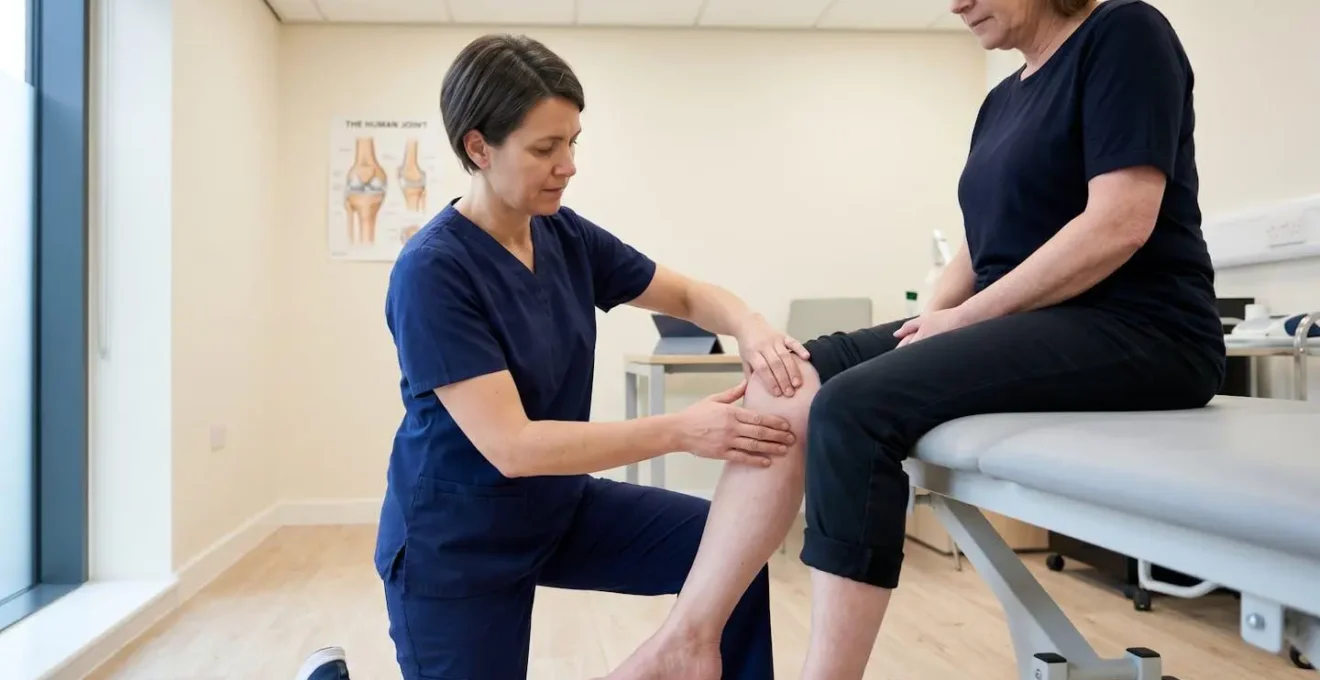
Understanding which factors respond to intervention — and which demand acceptance — transforms vague anxiety into strategic prevention. England alone recorded 4.51 million knee osteoarthritis cases in 2021, representing a 49% increase since 1990, according to consolidated Global Burden of Disease data for the United Kingdom. The question facing individuals in their forties and fifties is not whether risk exists, but which levers they can realistically pull.
This analysis examines the evidence base distinguishing modifiable from immutable contributors, quantifies the relative impact of each factor, and provides clinical thresholds for when monitoring shifts to professional assessment.
Medical information notice:
This article provides general health information based on peer-reviewed research and cannot replace individualised medical advice. Risk assessment and prevention strategies should be discussed with your GP (general practitioner) or consultant orthopaedic surgeon, particularly if you have existing knee symptoms, past injuries, or multiple risk factors. Clinical guidance may evolve as new evidence emerges.
Your arthritis prevention priorities in four points
- Weight management offers dual benefit: reduces mechanical load and inflammatory signalling
- Previous knee injuries require monitoring — post-traumatic arthritis can emerge a decade or more later
- Low-impact exercise protects joints (contrary to outdated ‘wear and tear’ assumptions)
- Family history matters but does not determine destiny — modifiable factors carry equal weight
Understanding which risk factors respond to intervention transforms prevention strategy. This analysis examines the evidence base distinguishing modifiable contributors from biological inevitabilities, quantifies their relative impact, and establishes clinical thresholds for when self-monitoring should shift to professional assessment.
What this article covers
- The controllable versus unalterable risk spectrum
- How excess body weight compounds mechanical and inflammatory stress
- When past injuries cast long shadows on joint integrity
- Age, genetics, and gender: the non-modifiable triumvirate
- Common questions about osteoarthritis risk factors
The controllable versus unalterable risk spectrum
The clinical picture of knee osteoarthritis emerges from a web of interacting factors, some written into genetic code, others shaped by decades of daily choices. Current clinical consensus indicates that modifiable risk factors — particularly obesity, occupational stress patterns, and post-injury rehabilitation quality — exert influence comparable to hereditary predisposition in determining individual outcomes. The interplay between these controllable variables and fixed genetic or age-related factors determines whether cartilage degeneration remains subclinical or progresses to symptomatic disease requiring intervention.
This distinction matters because it shapes prevention strategy. Whilst no intervention reverses the ageing process or rewrites inherited collagen structure, evidence-based guidelines demonstrate that targeted lifestyle modifications can delay symptom onset by years and reduce severity when degeneration does occur. The National Institute for Health and Care Excellence explicitly identifies overweight and obesity as key modifiable targets requiring intervention, as stated in clinical recommendations NG226 published by NICE.
| Risk Factor | Modifiable? | Relative Impact | Evidence Strength | Action You Can Take |
|---|---|---|---|---|
| Obesity | Yes | High | Strong (RCT evidence) | 5–10% weight loss target |
| Previous injury | No (but consequences modifiable) | High | Strong (cohort data) | Early physiotherapy post-injury |
| Age | No | Very High | Definitive | Amplify modifiable factors |
| Genetics | No | Moderate–High | Strong | Family history screening |
| Occupation | Partially | Moderate | Moderate | Ergonomic modifications |
| Gender (female) | No | Moderate | Strong | Post-menopausal monitoring |
The strategic implication: individuals with unfavourable non-modifiable profiles (advanced age, strong family history, female gender post-menopause) gain disproportionate benefit from addressing controllable factors. A 58-year-old woman with a mother who underwent knee replacement at 65 cannot alter her genetic inheritance, but maintaining healthy body weight and engaging in appropriate exercise may delay her own clinical threshold by a decade.
How excess body weight compounds mechanical and inflammatory stress
Obesity operates through two distinct pathways that converge on cartilage destruction. During normal walking, the knee joint absorbs compressive forces substantially greater than body weight alone, with force multiplication of several times body weight at each step. This mechanical reality explains why modest weight reduction produces outsized clinical benefit.
A population-based cohort analysing 1.76 million subjects revealed a clear dose-response gradient: compared to individuals maintaining healthy weight, those classified as overweight faced double the knee osteoarthritis risk, whilst grade I obesity tripled incidence and grade II obesity increased it nearly fivefold, as documented in this large-scale study published in Arthritis & Rheumatology. The knee joint showed the greatest obesity-related risk amplification among all assessed sites.

Beyond mechanical load, adipose tissue functions as an active endocrine organ releasing pro-inflammatory signalling molecules termed adipokines. These metabolic mediators enter systemic circulation and reach joint tissues even in non-weight-bearing sites, explaining why individuals with obesity demonstrate elevated hand osteoarthritis risk despite minimal mechanical stress on finger joints. Longitudinal studies suggest the inflammatory pathway may account for up to 40% of obesity’s total osteoarthritis impact, making weight management beneficial even for joints that bear minimal load.
Randomised controlled trials demonstrate that weight reduction in the range of 5–10% produces clinically meaningful improvements in pain, function, and radiographic progression rates. Crucially, these benefits manifest even when individuals remain above ideal body weight. Clinical guidelines recommend prioritising activities that minimise joint impact whilst maintaining cardiovascular benefit: swimming, cycling, and elliptical training preserve aerobic capacity without repetitive high loads, whilst resistance training targeting the quadriceps provides additional benefit through improved dynamic joint stability.
Common belief: Exercise accelerates cartilage wear and should be minimised to preserve joint longevity
Evidence-based reality: Systematic reviews of recreational runners show no increased osteoarthritis incidence compared to sedentary controls in individuals with healthy knees. Cartilage tissue requires cyclical loading to maintain nutrient exchange and structural integrity. The outdated ‘wear and tear’ model has been superseded by understanding that appropriate-intensity activity stimulates beneficial adaptive responses. Sedentary lifestyle correlates with faster degeneration, not preservation.
When past injuries cast long shadows on joint integrity
A significant proportion of knee osteoarthritis cases trace their origin to traumatic events occurring years or decades earlier. When ligaments lose tensile strength or meniscal tissue no longer cushions impact effectively, forces concentrate on cartilage regions never designed to bear primary stress. This creates focal points of accelerated breakdown that progress slowly but inexorably, with a latency period often spanning more than a decade between initial trauma and clinical osteoarthritis diagnosis.
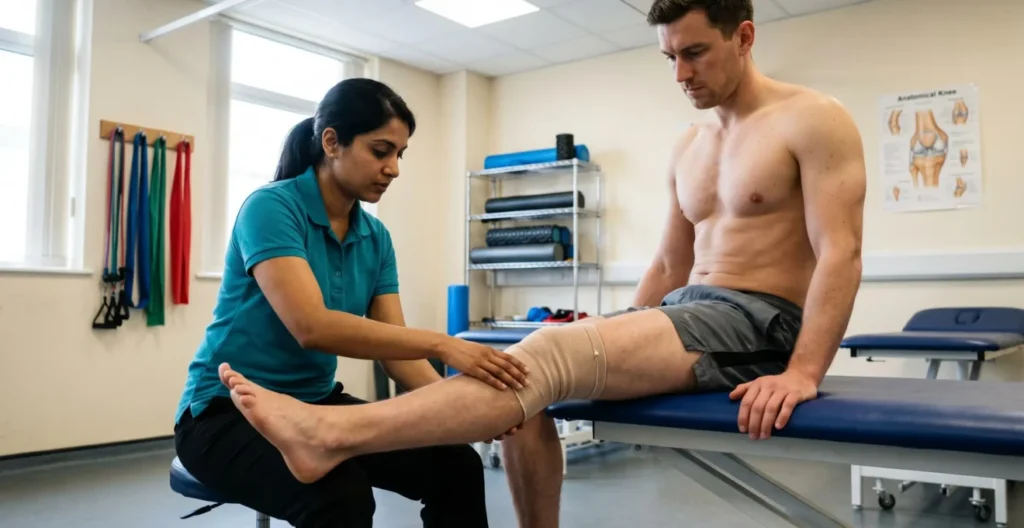
Post-traumatic arthritis accounts for an estimated 12% of all knee osteoarthritis cases. The risk elevation persists regardless of whether surgical reconstruction occurred — whilst ligament repair restores mechanical stability, it does not fully prevent the inflammatory cascade and biomechanical alterations that drive later degeneration. Certain injury patterns carry particularly high subsequent osteoarthritis rates: ACL rupture with concurrent meniscal damage produces one of the steepest risk gradients, whilst fractures extending into the articular surface create permanent irregularities that concentrate stress. The practical implication: assume elevated risk following significant knee injury and implement preventive strategies earlier than would otherwise be indicated.
Age, genetics, and gender: the non-modifiable triumvirate
Three variables operate beyond individual control yet exert profound influence on osteoarthritis trajectory. Incidence rises sharply beyond the fifth decade, with prevalence doubling approximately every ten years after age 50, reflecting cumulative mechanical stress and declining chondrocyte regenerative capacity. Twin studies and genome-wide association analyses estimate genetic predisposition accounts for 40–65% of susceptibility variation across populations, with specific variants affecting collagen structure and inflammatory response regulation.
Gender emerges as one of the most consistent risk factors across cohort studies. Women develop knee osteoarthritis at rates 30–40% higher than men, with 2021 prevalence in England reaching 5,227 per 100,000 women versus 3,753 per 100,000 men, consistent with the epidemiological data cited earlier. The disparity amplifies after menopause, implicating oestrogen decline in cartilage protection mechanisms.
The strategic response to non-modifiable risk: use them as triggers for earlier and more aggressive intervention on controllable factors. A 52-year-old woman whose mother developed severe knee arthritis at 58 cannot alter her genetic code, but she can prioritise weight management and structured exercise now rather than waiting for symptoms.
Should you consult a GP about your knee symptoms?
- If you are over 50 with persistent knee pain lasting more than 3 months, plus two or more risk factors (obesity, family history, previous injury, occupational stress):
GP consultation recommended within 8 weeks for baseline clinical assessment and potential imaging referral. This combination warrants professional evaluation even if pain remains manageable with over-the-counter analgesia. - If you have a history of significant knee injury (ligament rupture, meniscal tear, fracture) now experiencing new or worsening stiffness:
GP visit or self-referral physiotherapy (if available through your NHS trust) within 3 months. Post-traumatic risk justifies earlier intervention even for mild symptoms, as therapeutic exercise may slow progression. - If you experience only occasional discomfort without functional limitation (can climb stairs, walk a mile, rise from chairs without difficulty):
Implement preventive strategies — low-impact exercise programme and weight management if BMI exceeds 25 — and monitor symptoms over 6 months. Seek assessment if pain frequency increases, stiffness duration extends, or function declines. - If you have risk factors but no current symptoms:
Preventive strategies remain the priority. Professional consultation is not indicated in the absence of symptoms, but awareness should prompt lifestyle modifications now rather than waiting for clinical manifestations.
Common questions about osteoarthritis risk factors
If my mother had severe knee arthritis, will I definitely develop it?
Genetics account for 40–65% of susceptibility variation, meaning heredity matters but operates probabilistically rather than as destiny. Modifiable factors — particularly weight management, activity patterns, and injury prevention — carry equal or greater influence on individual outcomes. Family history should prompt earlier monitoring and more aggressive preventive strategies, not resignation to inevitable degeneration.
Will running damage my knee cartilage and cause arthritis?
Evidence demonstrates that recreational running at moderate intensity does not increase osteoarthritis risk in individuals with structurally healthy knees. Cartilage tissue requires cyclical loading to maintain nutrient exchange and structural integrity through mechanotransduction. Sedentary lifestyle correlates with faster cartilage degeneration, not preservation. High-impact activity on joints with existing damage requires individualised clinical assessment.
Is it too late to lose weight if I already have knee pain?
Clinical trials show that weight loss of 5–10% produces symptom improvement and slows radiographic progression even in established osteoarthritis. The dual mechanism — mechanical load reduction plus decreased inflammatory signalling from adipose tissue — operates at any disease stage. Benefits manifest within months and persist as long as weight loss is maintained.
Should I see a specialist if I’m only experiencing occasional stiffness?
Occasional stiffness without functional limitation does not typically require urgent specialist assessment. The appropriate first step is GP consultation if symptoms persist beyond 3 months, worsen progressively, or occur alongside multiple risk factors. Many NHS trusts now offer self-referral physiotherapy pathways that bypass initial GP visits.
Can supplements or specific diets prevent knee osteoarthritis?
Current evidence does not support glucosamine, chondroitin, or other dietary supplements for primary prevention in individuals without existing arthritis. General anti-inflammatory dietary patterns may contribute to systemic inflammation reduction, though direct cartilage protection remains unproven. Weight management through any sustainable dietary approach remains the most evidence-based nutritional intervention for risk reduction.
Important limitations of this information
- This article provides general risk factor information and cannot replace individualised medical assessment of your specific clinical situation
- Risk levels vary significantly between individuals based on complex interactions between factors not fully captured by population-level data
- Emerging research continues to identify new risk factors and mechanisms not yet incorporated into current clinical guidelines
- Preventive strategies should be discussed with your GP before implementation, particularly if you have existing health conditions or mobility limitations
For personalised evaluation of your osteoarthritis risk profile and guidance on appropriate prevention or treatment pathways, consult your GP (general practitioner) or a consultant orthopaedic surgeon specialising in knee conditions.
The most consistently documented insight across cohort studies and intervention trials is that partial control beats fatalistic acceptance. Individuals cannot rewrite genetic code, reverse chronological age, or undo past injuries — but they can address the factors that intersect with those immutable risks to determine actual clinical outcomes. The hierarchy of evidence-based interventions starts with weight management for those above healthy BMI thresholds, followed by structured low-impact exercise emphasising quadriceps strength and cardiovascular fitness. For individuals with significant injury history, this means beginning prevention a decade earlier than family history alone would suggest. The strategic question is not whether you will develop radiographic cartilage changes — nearly everyone does eventually — but whether those changes progress to symptomatic disease that limits function and quality of life. That outcome remains substantially influenced by decisions made today.