The effectiveness of your protein isn’t about its source (plant vs. animal), but its measurable quality and bioavailability.
- Plant proteins can be as effective as whey if you understand and manage their amino acid profiles and inherent anti-nutrients.
- Key metrics like the Digestible Indispensable Amino Acid Score (DIAAS) and the Leucine Threshold are more important than the marketing on the label.
Recommendation: Focus on protein quality scores and smart preparation techniques, not just the total grams listed on the package, to ensure your efforts in the gym pay off.
If you’re a vegetarian or flexitarian in Canada trying to build muscle, you’ve likely faced a nagging question: is the protein I’m eating actually being used by my body? You meticulously track your macros, ensuring you hit your daily protein target with lentils, beans, and plant-based powders, yet the results can feel slower than expected. This leads to a common dilemma: should you compromise your dietary preferences and switch to whey, the long-reigning king of the fitness world?
The standard advice often feels simplistic. You’re told that “whey absorbs better” or that you just need to “combine different plant sources.” While not incorrect, this information lacks the crucial details. It doesn’t explain *why* there’s a difference or *how* to effectively bridge the gap. This leaves you operating on guesswork, uncertain if your plant-based diet is truly supporting your fitness goals or subtly sabotaging them through a hidden protein deficit.
But what if the entire “plant versus whey” debate is framed incorrectly? The key isn’t the source itself, but the measurable, scientific quality of the protein you consume. This guide moves beyond the platitudes to give you the metrics and tools you need. We will dive into the science of protein digestibility, specifically the Digestible Indispensable Amino Acid Score (DIAAS), to understand why 20 grams of protein from one source isn’t the same as 20 grams from another. We’ll explore practical, Canadian-centric strategies for creating complete proteins and maximizing their absorption.
By focusing on bioavailability and amino acid profiles, you can learn to make any protein source, plant or animal, work efficiently for your body. This article will equip you with the knowledge to read labels critically, structure your meals for optimal energy, and ultimately build the muscle you’re working for, all without compromising your dietary principles.
This article provides a complete roadmap for understanding and optimizing protein absorption. You’ll find a detailed breakdown of the key concepts, from protein quality scores to meal timing, allowing you to build a smarter, more effective nutrition strategy.
Summary: Plant or Whey: Which Protein Source Actually Absorbs Into Your Muscles?
- Why Is 20g of Lentil Protein Not Equal to 20g of Egg Protein?
- How to Combine Plant Foods to Create a Complete Protein Profile?
- Hydrolyzed or Concentrate: Is the Extra Cost for Fast Absorption Worth It?
- The Labeling Scam: Is Your Protein Powder Actually Just Cheap Amino Acids?
- 30g or 50g: How Much Protein Can Your Body Use in One Meal?
- The Protein Deficit That Makes Your Gym Efforts Useless
- How to Structure Your Plate for 6 Hours of Steady Energy?
- Why is Muscle Mass Your Best Insurance Against Aging?
Why Is 20g of Lentil Protein Not Equal to 20g of Egg Protein?
The fundamental difference between protein sources lies not in the total grams, but in their quality and bioavailability. The gold standard for measuring this is the Digestible Indispensable Amino Acid Score (DIAAS). This metric assesses how well your body can digest and absorb the essential amino acids from a protein source. A higher score means more of the protein you eat is actually put to use for functions like muscle repair and growth.
Animal proteins typically score higher. For instance, research on protein digestibility shows that eggs have a near-perfect DIAAS score of 1.0, meaning your body can use virtually all of its amino acids. Whey protein also boasts a very high score. In contrast, many plant proteins score lower. Lentils, a staple for many vegetarians, have a DIAAS score around 0.7-0.75. This means that for every 20 grams of lentil protein you consume, only about 14-15 grams are effectively absorbed and utilized by your body. This 25-30% “loss” is significant for anyone trying to build muscle.
This discrepancy is largely due to two factors: an incomplete amino acid profile and the presence of “anti-nutrients” like phytates and lectins. These compounds, naturally found in plants, can bind to minerals and proteins, inhibiting their absorption. This doesn’t mean plant proteins are inferior, but it does mean they require a more strategic approach to consumption. Fortunately, simple kitchen techniques can dramatically improve their bioavailability.
Your Action Plan: Improve Plant Protein Absorption in Your Canadian Kitchen
- Soak and Sprout: Soak legumes like lentils and beans overnight in cold water. This can reduce phytates by up to 50%. Sprouting them for 2-3 days further increases the bioavailability of their nutrients.
- Use a Pressure Cooker: Utilize a pressure cooker, like an Instant Pot, for cooking beans and grains. The high heat and pressure are highly effective at breaking down stubborn lectins, making the proteins easier to digest.
- Cook with Kombu: Add a strip of kombu seaweed to the pot when you cook beans. This traditional Japanese technique helps soften the beans and contains enzymes that improve their overall digestibility.
- Pair with Vitamin C: Combine your plant protein sources with foods rich in Vitamin C, such as bell peppers, broccoli, or tomatoes. Vitamin C significantly enhances the absorption of non-heme iron, a crucial mineral often found in plant-based diets.
- Assess Your Plate: After cooking, look at your meal. Have you applied at least one of these techniques? Is there a source of Vitamin C present? This final check ensures you’re maximizing nutrient uptake.
By understanding that protein quality is a measurable metric, you can shift your focus from simply counting grams to optimizing the usability of every gram you consume.
How to Combine Plant Foods to Create a Complete Protein Profile?
The term “incomplete protein” often causes unnecessary alarm. It simply means that a single plant source may be low in one or more of the nine essential amino acids (EAAs) your body cannot produce on its own. The solution, known as protein complementation, involves combining different plant foods throughout the day to create a complete EAA profile. The classic example is rice and beans, but modern nutrition offers more effective and locally sourced options for Canadians.
The goal is to pair a food low in a specific EAA, like lysine, with another food that is high in it. For instance, grains are often low in lysine, while legumes are rich in it. Conversely, legumes tend to be low in the sulfur-containing amino acids methionine and cysteine, which are abundant in grains. By eating both, you provide your body with all the necessary building blocks.
A powerful combination, particularly relevant in Canada, involves yellow peas and brown rice. Research shows this duo creates a complete protein profile comparable to whey. Many Canadian companies now leverage this, sourcing sustainably grown yellow peas from provinces like Saskatchewan and Manitoba and combining them with other sources like brown rice or hemp protein from the Prairies. This not only supports local agriculture but also results in a high-quality, plant-based protein powder.
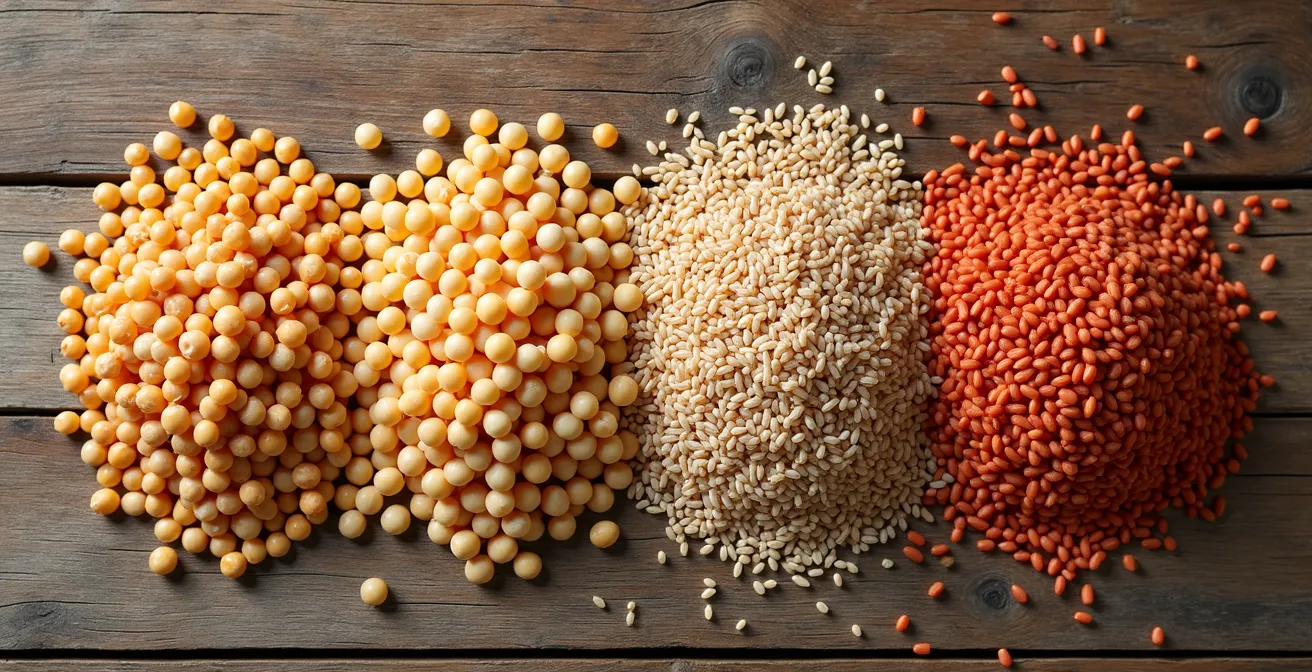
As the image above illustrates, building a complete protein plate is about variety and synergy. It’s not necessary to combine these foods in the same meal; as long as you consume a variety of complementary proteins throughout the day, your body will have the full spectrum of EAAs it needs for muscle protein synthesis. Other excellent pairings include lentils with quinoa, chickpeas with whole-wheat pita, and tofu with wild rice.
This strategic pairing transforms individual “incomplete” sources into a powerful, complete protein arsenal, ensuring your plant-based diet fully supports your muscle-building ambitions.
Hydrolyzed or Concentrate: Is the Extra Cost for Fast Absorption Worth It?
Once you decide on a protein powder, you’re faced with another layer of choice: concentrate, isolate, or hydrolyzed. These terms refer to the level of processing and filtration the protein has undergone. A whey concentrate is the least processed, containing about 70-80% protein along with some fats and lactose. An isolate is further filtered to remove most of the fats and lactose, yielding a 90-95% protein content. Hydrolyzed protein is taken a step further; it’s pre-digested with enzymes, breaking the protein into smaller peptides for the fastest possible absorption.
This extra processing comes at a steep price, especially in the Canadian market. A hydrolyzed powder can easily cost double what a concentrate does. The critical question for the average fitness enthusiast is whether this premium for rapid absorption provides a tangible benefit. For the vast majority of people, the answer is no.
As a leading Canadian sports nutrition analysis suggests, the context of your training is everything. The slight recovery edge from hydrolyzed protein might be relevant for a professional athlete in a grueling training camp, but it’s largely unnecessary for most people.
For a semi-pro hockey player in an intense training block, hydrolyzed might offer a slight recovery edge. For the average person going to a GoodLife Fitness or a YMCA 3-4 times a week, a high-quality Canadian grass-fed whey concentrate or isolate is more than sufficient.
– Canadian sports nutrition analysis, Canadian Protein company recommendations
The following table, based on typical Canadian pricing, clearly shows the trade-offs between cost, protein content, and intended user.
| Type | Price (CAD) | Protein Content | Lactose | Best For |
|---|---|---|---|---|
| Whey Concentrate | $54.99-59.99 | 70-80% | Higher | Budget-conscious, general fitness |
| Whey Isolate | $79.99-109.99 | 90-95% | Very Low | Lactose sensitive, lean muscle |
| Hydrolyzed | $100+ | 95-99% | None | Elite athletes, rapid recovery |
| Plant Blend | $59.99 | 70-85% | None | Vegan, digestive sensitive |
For a flexitarian or vegetarian, a high-quality plant blend or a whey isolate (if dairy is acceptable and lactose is a concern) offers the best balance of protein quality, digestibility, and value without paying a premium for absorption speeds you likely don’t need.
The Labeling Scam: Is Your Protein Powder Actually Just Cheap Amino Acids?
The supplement industry is notorious for its deceptive marketing, and protein powders are no exception. One of the most insidious practices is “amino spiking,” also known as “nitrogen spiking.” This is where manufacturers bulk up the protein content listed on the label by adding cheap, non-essential amino acids like glycine or taurine. Standard tests for protein content measure total nitrogen, and since all amino acids contain nitrogen, these fillers artificially inflate the reading. You might think you’re buying 25 grams of high-quality whey or pea protein, but you could be getting a significant portion of cheap, ineffective filler.
This is why simply looking for a “high protein” claim on the front of the tub is a flawed strategy. Consumers need to become adept at reading the fine print and looking for third-party verification to ensure they are getting what they pay for. This is where living in Canada provides a distinct advantage for consumer protection.
Unlike in the US, all Natural Health Products (NHPs) sold in Canada must have a Natural Product Number (NPN) issued by Health Canada. This eight-digit number on the label signifies that the product has been reviewed and approved by Health Canada for its safety, efficacy, and quality. This regulatory oversight provides a crucial layer of trust that is absent in the less-regulated American market. If a protein powder sold in Canada doesn’t have an NPN, it is a major red flag.
Beyond the NPN, discerning consumers should also look for third-party certifications like NSF Certified for Sport or Informed-Sport. These programs test products for banned substances and, most importantly, verify that the contents of the container match the claims on the label. This is your best guarantee against amino spiking and ensures the product’s purity and potency.
By prioritizing products with an NPN and third-party certifications, you can confidently invest in a protein powder that is both safe and effective, ensuring your money and effort are not wasted on a spiked product.
30g or 50g: How Much Protein Can Your Body Use in One Meal?
A persistent myth in fitness circles is that the body can only absorb a small amount of protein—typically cited as 20-30 grams—in a single sitting. Any excess, the argument goes, is wasted or converted to fat. This idea is an oversimplification. While there is an optimal dose for maximizing muscle protein synthesis (MPS) at one time, the body is more than capable of digesting larger quantities of protein over a longer period.
The key to understanding protein utilization is the concept of the Leucine Threshold. Leucine is one of the three branched-chain amino acids (BCAAs) and acts as the primary trigger for initiating MPS. To flip the “on” switch for muscle building, a meal needs to contain a sufficient amount of this key amino acid. According to muscle protein synthesis research, this trigger point is generally around 2.5 to 3 grams of leucine.
A typical 25-30 gram scoop of whey protein easily provides this amount. However, many plant proteins have a lower leucine concentration. You might need 35-40 grams of a plant-based protein to hit the same Leucine Threshold and achieve the same muscle-building stimulus. This doesn’t mean you need to consume massive amounts; it just means you need to be mindful of the dose required to trigger MPS. Consuming a 50g protein meal isn’t “wasteful”; the body will simply digest it more slowly, providing a sustained release of amino acids over several hours, which can be beneficial for preventing muscle breakdown.
The optimal protein intake per meal and per day depends heavily on your body weight and activity level. Here is a simple framework for Canadian adults:
- Sedentary Senior: Aim for 20-25g of protein per meal, with a daily total of around 0.8g per kg of body weight.
- Active Adult (e.g., at a YMCA 3-4x/week): Target 25-30g per meal, with a daily intake of 1.2-1.6g per kg of body weight.
- Competitive Athlete (e.g., hockey, intense training): Require 30-40g per meal, with a daily total of 1.6-2.2g per kg of body weight.
- Timing: Spread your total intake across 3-4 meals to consistently stimulate MPS. The “anabolic window” is also more flexible than once thought; consuming your post-workout protein within 3 hours is effective.
Instead of fixating on a rigid upper limit per meal, it’s more productive to ensure each meal contains enough high-quality, leucine-rich protein to meet the threshold and to spread your total intake evenly throughout the day.
The Protein Deficit That Makes Your Gym Efforts Useless
You can have the most disciplined workout routine in the world, but without adequate protein, your efforts in the gym will be largely futile. Protein provides the essential amino acids that are the literal building blocks for repairing and growing muscle tissue. When you exercise, you create micro-tears in your muscles; protein is what rebuilds them stronger. A chronic deficit, even a small one, means your body is in a constant state of breakdown without sufficient resources for repair. This not only halts muscle growth but can lead to muscle loss, fatigue, and a weakened immune system.
Many people, especially in Canada, misattribute the symptoms of inadequate protein intake to other factors. This is particularly true during the long winter months.
Many Canadians mistake symptoms of inadequate protein intake – persistent fatigue, poor immune function, sugar cravings, slow-healing skin – for effects of long winters and lack of sunlight. Proper protein intake throughout the winter months can significantly improve these symptoms that people incorrectly attribute to seasonal factors.
– Canadian winter fatigue and protein deficiency
This experience highlights how a hidden protein deficit can masquerade as Seasonal Affective Disorder (SAD) or general “winter blues.” The persistent feeling of being run down, catching every cold that goes around, or finding your skin and hair are lackluster can often be traced back to a diet that is not supplying enough high-quality protein to meet your body’s recovery and maintenance needs.
For a vegetarian or flexitarian, this risk is slightly elevated due to the lower bioavailability and potentially incomplete amino acid profiles of some plant sources. It’s not that a plant-based diet is inherently deficient, but it requires more conscious planning to avoid this deficit. Failing to account for the lower DIAAS scores of certain foods or neglecting protein complementation can lead to a gap between the protein you *think* you’re eating and the protein your body is *actually* using, rendering your hard work at the gym ineffective.
Ensuring your diet provides a sufficient supply of complete, bioavailable protein is the non-negotiable foundation upon which all fitness gains are built.
How to Structure Your Plate for 6 Hours of Steady Energy?
The key to sustained energy is not just about eating enough, but about eating smart. A well-structured meal provides a balanced release of nutrients, preventing the sharp blood sugar spikes and subsequent crashes that leave you feeling tired and reaching for a quick-fix snack. The goal is to combine high-quality protein, complex carbohydrates, and healthy fats to create a slow-burning fuel source. This principle is perfectly aligned with Canada’s Food Guide, which advocates for a plate that is half vegetables and fruits, a quarter protein, and a quarter whole grains.
For someone focused on muscle building and sustained energy, this guide can be optimized further. The protein portion should consist of sources that also provide healthy fats, such as salmon, or are paired with them, like tofu cooked in olive oil. The whole grain portion should feature complex carbohydrates that have a low glycemic index, such as quinoa, wild rice, or oats, which release their energy slowly over several hours.
Creating meals that provide hours of steady energy is about strategic combinations. For example, a classic Canadian breakfast of overnight oats made with hemp hearts and berries combines complex carbs, complete plant-based protein, and healthy fats. For lunch, a large salad with a base of dark leafy greens, topped with chickpeas, quinoa, and a sprinkle of seeds, provides a similar balanced nutrient profile. These meals are designed to be digested slowly, providing a steady stream of amino acids and glucose to your muscles and brain for up to six hours.
By making each meal a strategic combination of protein, fiber-rich carbs, and healthy fats, you create a powerful buffer against energy slumps. This not only fuels your workouts but also improves focus and productivity throughout the day, eliminating the energy rollercoaster that plagues so many diets focused solely on calories or a single macronutrient.
This approach to meal structure transforms food from a simple calorie source into a high-performance tool for sustained energy and optimal recovery.
Key Takeaways
- Protein quality, measured by DIAAS, is more important than total grams. Plant proteins often have lower scores but can be improved with preparation.
- Combining different plant foods (e.g., legumes and grains) creates a complete amino acid profile, making a plant-based diet fully effective for muscle building.
- Ensure each meal contains at least 2.5-3g of leucine to trigger muscle protein synthesis; this may require a larger serving of plant protein compared to whey.
Why is Muscle Mass Your Best Insurance Against Aging?
Thinking of muscle mass merely in terms of aesthetics or athletic performance is a narrow view. As we age, muscle mass becomes one of the most critical indicators of overall health and longevity. It is your body’s primary metabolic engine and a crucial reservoir of amino acids. Maintaining or building muscle, a process known as sarcopenia prevention, is your best insurance policy against many of the debilitating effects of aging.
Strong muscles do more than just lift heavy things. They play a vital role in glucose metabolism, helping to pull sugar from the bloodstream and reducing the risk of insulin resistance and type 2 diabetes. A higher muscle mass also translates to a higher resting metabolic rate, making it easier to maintain a healthy body weight. Furthermore, during times of illness or injury, the body can draw on the amino acids stored in muscle tissue to support immune function and repair damaged tissues. A person with more muscle mass has a greater reserve to draw from, significantly improving their resilience and recovery prospects.
This is why prioritizing protein intake becomes increasingly important as we get older. The body’s ability to stimulate muscle protein synthesis becomes less efficient, a phenomenon known as “anabolic resistance.” This means seniors often need more protein per meal to achieve the same muscle-building response as a younger person. The conversation around protein is no longer just for bodybuilders; it’s a fundamental pillar of healthy aging for everyone. And thanks to nutritional science, high-quality options are more accessible than ever. As recent nutrition innovations show, plant-based protein powders in 2024 now offer complete amino acid profiles and high bioavailability, making them an excellent and digestible option for all age groups.
Investing in your muscle mass through consistent resistance training and adequate protein intake is a direct investment in your future health, independence, and quality of life.
Frequently Asked Questions About Plant or Whey: Which Protein Source Actually Absorbs Into Your Muscles?
What is Health Canada’s NPN system?
Natural Health Products in Canada require a Natural Product Number (NPN) on the label, which provides regulatory oversight different from the FDA framework in the US. This number indicates the product has been reviewed and approved by Health Canada for safety, quality, and efficacy.
How can I verify my protein powder’s authenticity in Canada?
Check for the NPN number on the label and cross-reference it on Health Canada’s Licensed Natural Health Products Database. This allows you to confirm that the product has been officially reviewed and approved, providing a strong measure of authenticity.
What certifications should Canadian consumers look for?
Beyond the mandatory NPN, look for third-party certifications like NSF Certified for Sport or Informed-Sport. These independent programs test products to guarantee they are free of banned substances and that the label claims accurately reflect the product’s contents, protecting you from issues like amino spiking.