The most effective natural anxiolytic depends on the *type* of anxiety: fast-acting agents for acute panic, versus adaptogens for long-term resilience.
- Fast-acting herbs like Passionflower and Valerian directly target GABA receptors for a sedative effect, while L-theanine offers calm focus without drowsiness.
- Aromatherapy with Lavender provides rapid, pre-cognitive calming by directly influencing brain waves through the olfactory pathway.
Recommendation: For acute panic attacks, focus on vagal nerve stimulation and fast-acting herbs like Passionflower. For building long-term resilience, incorporate adaptogens like Ashwagandha, and always verify Health Canada NPN numbers for safety and quality.
The feeling is unmistakable: a sudden wave of intense fear, a racing heart, shortness of breath, and a dizzying sense of losing control. A panic attack is a profound physiological and psychological event that feels anything but “natural.” In the desperate search for relief, many turn to the world of herbal medicine, where Valerian and Lavender are often touted as gentle solutions. However, the common advice to simply “drink a calming tea” often falls short in the face of such acute distress. This approach fails to distinguish between mild stress and the neurological storm of a panic attack.
The conventional wisdom around natural remedies frequently overlooks the critical nuances of their mechanisms. Not all anxiolytics are created equal. Some are better suited for managing chronic, low-grade anxiety, while others possess the specific pharmacological properties needed to intervene in an acute crisis. This distinction is paramount for anyone seeking effective, non-pharmaceutical support, especially when navigating the complex landscape of supplements and their interactions with other medications.
But what if the key wasn’t just in the herb itself, but in understanding its specific neurochemical pathway? The real power lies in moving beyond generic claims and dissecting *how* these compounds work in the brain. Is it by enhancing the calming neurotransmitter GABA, lowering the stress hormone cortisol, or directly influencing the brain waves associated with a state of calm? This evidence-based approach allows for a more strategic and effective use of nature’s pharmacopeia.
This guide will move beyond the platitudes to provide a comparative analysis of natural anxiolytics. We will explore the science behind Passionflower’s sedative effects, build a natural first-aid kit for high-stress days, compare L-Theanine and CBD for anxiety without brain fog, and unpack the critical safety warnings for herbs like St. John’s Wort. Finally, we will investigate how to leverage physiological “hacks” involving cortisol, aromatherapy, and the vagus nerve to regain control during moments of intense anxiety.
By understanding the unique properties of each remedy, you can build a personalized and effective strategy for managing anxiety. The following sections offer a detailed exploration of these evidence-based tools and techniques, tailored for a Canadian context.
Summary: A Comparative Guide to Natural Anxiolytics for Acute Anxiety
- Why Does Passionflower Calm Your Brain Like a Mild Sedative?
- How to Build a Natural First Aid Kit for High Stress Days?
- L-Theanine or CBD: Which Supplement Reduces Anxiety Without Brain Fog?
- The “Serotonin Syndrome” Risk: Mixing St. John’s Wort with Antidepressants
- When to Take Ashwagandha: Morning for Resilience or Night for Sleep?
- How to Lower Cortisol in 10 Minutes Before a Meeting?
- Why Does Smelling Lavender Change Your Brain Waves?
- How to Hack Your Vagus Nerve to Stop Anxiety Attacks?
Why Does Passionflower Calm Your Brain Like a Mild Sedative?
When a panic attack strikes, the brain’s “excitatory” circuits are in overdrive. The key to restoring calm is to enhance the activity of the primary inhibitory neurotransmitter: gamma-aminobutyric acid (GABA). Many prescription anxiolytics, like benzodiazepines, work by binding to GABA-A receptors, effectively “pumping the brakes” on neural activity. Passionflower (Passiflora incarnata) operates through a remarkably similar neurochemical pathway, which explains its potent sedative-like effects without the same level of side effects.
The active compounds in passionflower, particularly the flavonoids, are believed to increase GABA levels in the brain and enhance the binding of GABA to its receptors. This action reduces neuronal excitability, leading to a state of relaxation, reduced anxiety, and muscle tension relief. Unlike some pharmaceuticals, it achieves this without causing significant cognitive impairment or dependency, making it a compelling option for acute anxiety management. The key is its ability to provide a noticeable calming effect with a favorable safety profile.
Clinical Comparison: Passionflower vs. Oxazepam for Anxiety
A four-week double-blind study of thirty-six people with anxiety directly compared the efficacy of passionflower to the standard pharmaceutical drug oxazepam. While oxazepam worked more quickly at the outset, the study found that by the end of the four-week trial, both treatments proved equally effective in reducing anxiety symptoms. Crucially, passionflower demonstrated a significant advantage regarding side effects; the use of oxazepam was associated with more impairment of job performance, a side effect not seen in the passionflower group.
For Canadians, it’s essential to source high-quality passionflower products to ensure efficacy and safety. Look for products with a Natural Product Number (NPN) issued by Health Canada, which indicates the product has been assessed for safety, quality, and health claims. Tinctures often provide the fastest absorption, making them ideal for acute situations, while standardized capsules offer consistent dosing.
This evidence positions passionflower not as a mild, generic “calming herb,” but as a targeted, evidence-based anxiolytic that leverages a core neurochemical pathway for anxiety relief.
How to Build a Natural First Aid Kit for High Stress Days?
Managing anxiety effectively isn’t about finding a single magic bullet; it’s about building a versatile toolkit you can turn to when stress levels rise. A “natural first aid kit” is a personalized collection of remedies and tools that address anxiety from multiple angles—physiologically, psychologically, and sensorially. This is particularly relevant in Canada, where the dramatic shifts in seasons can directly impact mood and stress levels, from the low light of winter to the high energy of summer.
This introduces the concept of a seasonal, holistic approach. An effective kit should contain a variety of tools that cater to different stressors and personal preferences. Your kit might include fast-acting herbal tinctures, aromatherapy oils for sensory grounding, tools for physiological regulation, and supplements to address nutrient deficiencies linked to mood, such as Vitamin D during the long Canadian winters.
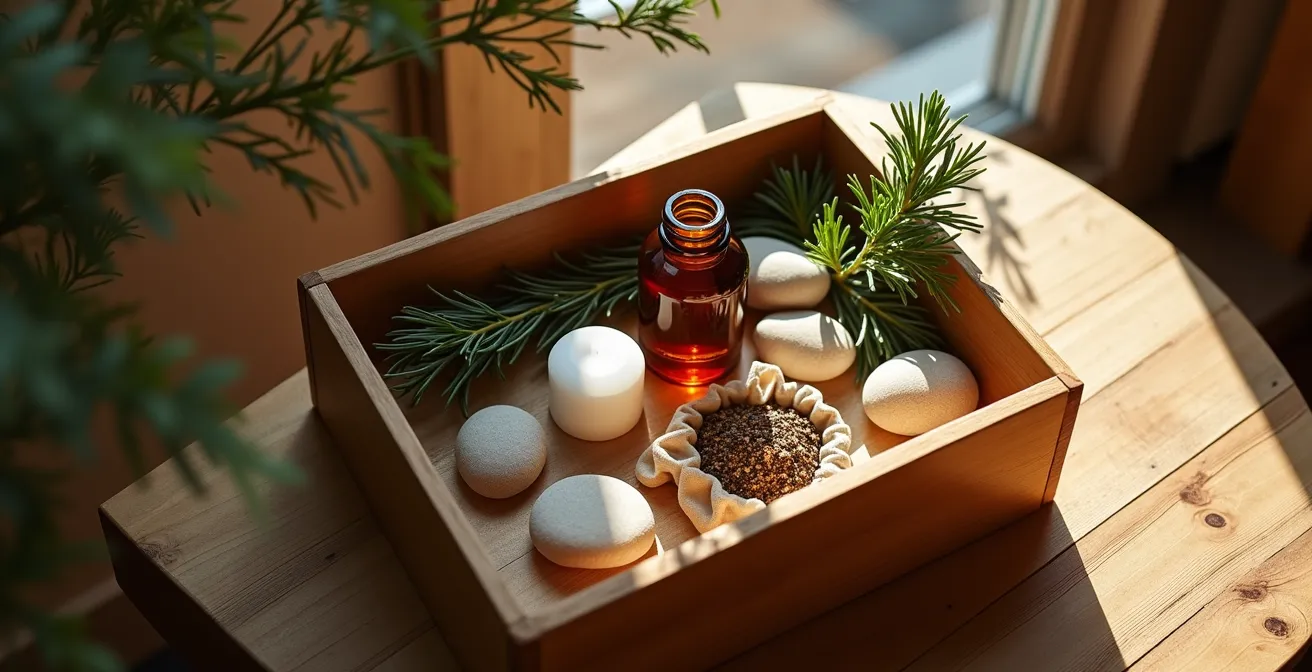
As you can see, the focus is on natural textures and accessible tools. The goal is to create a ritual around these items, turning to your kit not just in a crisis, but proactively to manage stress. This creates a powerful Pavlovian response where the mere act of opening your kit can begin to signal to your nervous system that relief is on the way. The key is to curate items that you find genuinely calming and effective.
This comparative table shows how you can adapt your anxiety management strategy to the specific stressors of each Canadian season, creating a truly dynamic and responsive wellness plan. A recent analysis of seasonal wellness strategies supports this tailored approach.
| Season | Primary Stressor | Natural Remedy | Application Method |
|---|---|---|---|
| Winter (Dec-Feb) | SAD/Low Light | Vitamin D + Light Therapy | 3000 IU daily + 30min morning exposure |
| Spring (Mar-May) | Allergies/Transition | Quercetin + Local Honey | 500mg quercetin + 1 tbsp honey daily |
| Summer (Jun-Aug) | Heat/Overstimulation | Peppermint Oil + Cooling Stones | Diluted temple application + refrigerated stone therapy |
| Fall (Sep-Nov) | Back-to-routine stress | Ashwagandha + Rhodiola | 600mg ashwagandha + 200mg rhodiola morning |
By personalizing your kit, you empower yourself with a range of options, ensuring you always have the right tool on hand to meet the moment, no matter the season.
L-Theanine or CBD: Which Supplement Reduces Anxiety Without Brain Fog?
In the search for anxiety relief that doesn’t compromise mental clarity, two compounds stand out: L-Theanine and Cannabidiol (CBD). While both are renowned for their calming properties, they operate through distinct neurochemical pathways, resulting in different subjective experiences. The choice between them often comes down to the user’s specific goal: is it to quiet a racing mind while maintaining focus, or to achieve a more profound, full-body anxiolytic effect?
L-Theanine, an amino acid found predominantly in green tea, is famous for promoting a state of “alert relaxation.” It works by increasing alpha brain waves, which are associated with a state of wakeful rest, similar to meditation. It also influences calming neurotransmitters like GABA and serotonin without causing drowsiness. This makes it an ideal choice for managing daytime anxiety, improving focus during stressful tasks, and blunting the jittery side effects of caffeine.
CBD, on the other hand, interacts with the body’s endocannabinoid system, a master regulatory network that influences mood, sleep, and stress response. Its anxiolytic effects are more widespread and potent. A 2024 meta-analysis revealed that CBD showed a significant impact on anxiety, with a large effect size across hundreds of participants. This makes it a powerful tool for generalized anxiety and fear-based thinking. As noted by the Canadian Cannabis Clinics Research Team, it offers a robust solution. They state in their guidelines:
CBD can reduce stress levels and other anxiety-related symptoms in animals, which is good news for those with generalized anxiety disorder. Studies suggest that CBD is particularly helpful in dampening any negative mental effects caused by fear. This could help alleviate some of the constant worrying that results from GAD.
– Canadian Cannabis Clinics Research Team, Medical Cannabis for Anxiety Guidelines
The primary difference is that L-Theanine sharpens the mind while calming it, whereas CBD provides a deeper, more systemic sense of calm that can, at higher doses, lead to mild sedation. For someone facing a high-pressure presentation, L-Theanine might be preferable. For someone trying to stop the cycle of worry from a generalized anxiety disorder, CBD could be more effective. Navigating their use in Canada requires careful attention to regulations.
Your Action Plan: Navigating Legal CBD vs. L-Theanine in Canada
- Legal CBD Sourcing: Purchase CBD products exclusively from licensed provincial cannabis retailers such as the Ontario Cannabis Store (OCS), Société québécoise du cannabis (SQDC), or BC Cannabis Stores (BCCS) to ensure product safety and legal compliance.
- L-Theanine Availability: Find L-Theanine as an over-the-counter supplement at most pharmacies, like Shoppers Drug Mart, and health food stores. Always look for a Health Canada NPN on the label.
- Dosage Guidance: Start with a low dose and titrate up. For L-Theanine, a typical dose for focus is 200-400mg. For CBD, a starting dose for anxiety is often in the 25-40mg range.
- Label Verification: When purchasing CBD, meticulously check the label for THC content. To be sold outside of licensed dispensaries (if ever applicable) and to avoid psychoactive effects, it must contain less than 0.3% THC.
- Interaction Check: Before beginning either supplement, consult with a pharmacist or doctor to check for potential interactions with any other medications you are taking.
Ultimately, L-Theanine is for calm focus, and CBD is for deep calm. Understanding this distinction is the key to choosing the right tool for the job without the unwanted side effect of brain fog.
The “Serotonin Syndrome” Risk: Mixing St. John’s Wort with Antidepressants
St. John’s Wort (Hypericum perforatum) has a long-standing reputation as a natural mood elevator. Its efficacy is not just folklore; modern research confirms that St. John’s wort is effective in alleviating mild to moderate depression, often performing on par with standard antidepressants. It primarily works by inhibiting the reuptake of serotonin, dopamine, and norepinephrine, allowing these “feel-good” neurotransmitters to remain active in the brain for longer. This mechanism is very similar to that of many prescription Selective Serotonin Reuptake Inhibitors (SSRIs).
However, this shared mechanism of action is precisely what makes St. John’s Wort one of the most hazardous herbal supplements to self-prescribe. When taken concurrently with prescription antidepressants (like SSRIs or MAOIs), there is a significant risk of causing serotonin syndrome. This potentially life-threatening condition occurs when there is an excessive amount of serotonin in the brain, leading to symptoms ranging from agitation, confusion, and rapid heart rate to high blood pressure, muscle twitching, and, in severe cases, seizures or loss of consciousness.
The danger lies in the public perception of St. John’s Wort as a “gentle” or “harmless” herbal alternative, leading individuals to combine it with their prescribed medication without consulting a healthcare professional. The effectiveness of this herb is inextricably linked to its powerful pharmacological activity, which demands the same level of caution as any prescription drug.
How Canadian Pharmacy Systems Prevent Dangerous Interactions
The effectiveness of St. John’s Wort necessitates careful use, particularly due to its potential for serious drug interactions. This risk is so well-documented that it has been integrated into pharmacy safety protocols. For instance, provincial pharmacy systems in Canada, such as Ontario’s Drug Profile and Information Network (DPIN), are designed to automatically flag potential interactions. When a pharmacist enters both a prescription for an SSRI and a purchased St. John’s Wort supplement into a patient’s profile, the system generates an immediate alert, prompting a critical consultation to prevent the onset of serotonin syndrome. This highlights the pharmacological potency of the herb and the importance of integrated healthcare.
While St. John’s Wort can be an effective tool under medical supervision, its potential for dangerous interactions makes it a prime example of why “natural” does not automatically mean “safe.” Always disclose all supplement use to your doctor and pharmacist.
When to Take Ashwagandha: Morning for Resilience or Night for Sleep?
Ashwagandha (Withania somnifera) is a cornerstone of Ayurvedic medicine, prized for its role as an adaptogen. Unlike fast-acting anxiolytics that target acute panic, adaptogens work over time to enhance the body’s resilience to stress. Ashwagandha modulates the hypothalamic-pituitary-adrenal (HPA) axis, the body’s central stress response system. By helping to regulate cortisol levels, it builds a stronger, more stable foundation, making you less susceptible to being overwhelmed by daily stressors.
This leads to a common question: what is the optimal time to take it? The answer is not one-size-fits-all and depends heavily on an individual’s unique biological rhythm, or chronotype. Ashwagandha has a biphasic effect; it can promote energy and resilience during the day while supporting deeper, more restorative sleep at night. Tailoring the timing of your dose to your specific chronotype can significantly enhance its benefits. A “night owl” who struggles with morning grogginess may benefit most from a morning dose to buffer cortisol, whereas an “early bird” who feels tired but wired in the evening may find a nighttime dose more effective for promoting sleep.
Understanding your body’s natural energy patterns is key to unlocking ashwagandha’s full potential. A generic recommendation ignores the personalized nature of herbal medicine. The following table, based on common chronotype patterns, offers a more nuanced approach to dosing, as supported by emerging research on personalized supplement timing.
| Chronotype | Morning Energy | Evening State | Recommended Timing | Suggested Dose |
|---|---|---|---|---|
| Lion (Early Bird) | High | Low/Tired | Evening (7-8 PM) | 300-600mg |
| Bear (Average) | Moderate | Moderate | Split AM/PM | 300mg x2 |
| Wolf (Night Owl) | Low/Groggy | Wired | Morning (7-8 AM) | 400-600mg |
| Dolphin (Insomniac) | Variable | Alert/Anxious | Evening only | 600-900mg |
For those with a “Bear” chronotype (the majority of the population), splitting the dose between morning and evening can provide balanced support throughout the day. For those struggling with significant sleep-onset anxiety, a larger dose in the evening can be particularly beneficial. As with all supplements, it is wise to start with a lower dose and gradually increase it as you observe your body’s response.
By synchronizing your ashwagandha intake with your own biological clock, you move from a passive consumer to an active participant in your wellness, using this powerful adaptogen to build a more resilient nervous system.
How to Lower Cortisol in 10 Minutes Before a Meeting?
You have a high-stakes meeting in ten minutes, and the tell-tale signs of acute stress are setting in: a racing heart, shallow breathing, and a mind that won’t stop spinning. This is your sympathetic nervous system—the “fight or flight” response—flooding your body with the stress hormone cortisol. While useful for escaping a real threat, this response is counterproductive for clear thinking and confident communication. The key to regaining control is to rapidly activate the opposing system: the parasympathetic nervous system, or “rest and digest.”
Fortunately, you have direct, conscious control over this system through your breath. One of the fastest, most effective techniques for doing so, backed by neuroscience research, is the “physiological sigh.” Unlike simple deep breathing, this specific pattern of inhaling twice before a long exhale is the body’s natural way to offload carbon dioxide and signal to the vagus nerve that it’s safe to stand down. This simple action can produce an immediate and noticeable shift from a state of anxiety to one of calm alertness.
Another powerful tool for immediate grounding is aromatherapy. As explained by Treatwiser Natural Health Research, this is not just about pleasant smells; it’s about direct neurochemical impact. They note:
Inhaling the floral aroma stimulates the olfactory nerve in your nose, sending calming messages to a part of your brain called the amygdala involved in regulating emotions like fear. Essential oils snap you back into the present moment and out of repetitive thinking.
– Treatwiser Natural Health Research, 7 Top Herbal Remedies for Anxiety and Stress
Combining a physiological technique with a sensory one creates a powerful one-two punch against rising cortisol. The following protocol can be performed discreetly at your desk or in a restroom in just a few minutes, providing an immediate reset button before you walk into that meeting.
- Step 1: Inhale through your nose. Take a normal, deep breath, filling your lungs to about 75% capacity.
- Step 2: Add a second “sip” of air. Without exhaling, take another short, sharp inhale to fill the final 25% of your lung capacity. This helps re-inflate any collapsed alveoli.
- Step 3: Exhale slowly. Purse your lips and exhale slowly and completely, making the exhale significantly longer than the inhales (e.g., for a count of 6-8 seconds).
- Step 4: Repeat. Perform this cycle 2 to 3 times for immediate activation of the parasympathetic nervous system.
- Step 5: Add cold exposure (optional). If possible, splash your face with cold water or press a cold can against your neck for 30 seconds to further stimulate the vagus nerve.
This is not just “calming down”; it is a direct physiological intervention that gives you the power to manage your body’s stress response on demand, ensuring you enter stressful situations with a clear head.
Why Does Smelling Lavender Change Your Brain Waves?
Lavender is perhaps the most widely recognized natural anxiolytic, but its mechanism is often misunderstood. While lavender tea or capsules can have a mild systemic effect, the most profound and rapid-acting benefit comes from inhaling its aroma. This is not a placebo effect; it is a direct and measurable neurological event. Inhaling the essential oil of lavender (LEO) bypasses the digestive system and delivers active compounds directly to the brain via the olfactory system, triggering an almost instantaneous shift in mood and physiology.
The primary active compounds responsible for this are two terpenes: linalool and linalyl acetate. When you inhale lavender, these molecules travel up the nasal passages and bind to receptors on the olfactory bulb. This sends an electrical signal directly to the limbic system, particularly the amygdala—the brain’s emotional processing and fear center. This direct pathway explains why a scent can trigger such a powerful emotional or memory response before you’ve even had a chance to consciously identify it. It is a pre-cognitive calming mechanism.
The Neurological Pathway of Lavender’s Calming Effect
Many people use lavender to calm their nerves and alleviate anxiety, and science is beginning to understand why. Lavender essential oil (LEO) contains chemicals called terpenes, specifically linalool and linalyl acetate. Research has shown that these compounds, when inhaled, travel directly from nasal receptors to the amygdala. This process has been shown to increase the prevalence of alpha and theta brain waves, which are associated with states of relaxation and meditative calm. This explains the rapid, pre-cognitive calming effect that occurs often within minutes of exposure.
This rapid onset of action is a key differentiator from many ingested herbs. Research demonstrates that lavender’s onset of efficacy is more rapid than many first-line agents, with measurable results taking root within just a couple of weeks for consistent use, and near-instantaneous effects for acute aromatherapy. This makes inhaling lavender essential oil a powerful tool for “in the moment” anxiety relief, capable of disrupting a rising sense of panic before it becomes overwhelming.
By simply placing a few drops on a tissue and inhaling deeply, you are engaging in a sophisticated form of neuro-modulation, using a simple scent to steer your brain away from anxiety and toward a state of calm.
Key Takeaways
- Differentiate between acute anxiolytics (e.g., Passionflower) for panic and long-term adaptogens (e.g., Ashwagandha) for building resilience.
- Immediate relief can be achieved through physiological hacks like vagal nerve stimulation or the “physiological sigh,” which directly counter the stress response.
- Always verify the safety of herbal supplements by checking for drug interactions (e.g., St. John’s Wort and SSRIs) and sourcing legally in Canada (NPNs, licensed retailers for CBD).
How to Hack Your Vagus Nerve to Stop Anxiety Attacks?
The vagus nerve is the main highway of your parasympathetic “rest and digest” system. It runs from your brainstem down through your neck and into your chest and abdomen, acting as a master control switch for calming your body down. When you are in the throes of a panic attack, your sympathetic “fight or flight” system is in charge. Hacking your vagus nerve means intentionally performing actions that stimulate it, forcing your body to shift back into a parasympathetic state and effectively stopping the panic attack in its tracks.
Techniques that stimulate the vagus nerve often involve temperature changes, vibration, or specific breathing patterns. These actions send a signal up to the brain that the “threat” has passed, initiating a cascade of calming effects: your heart rate slows, your breathing deepens, and your muscles relax. This is a powerful, body-up approach to anxiety management that puts you back in the driver’s seat. The following is an emergency protocol designed to be used at the first sign of a panic attack.
Your Checklist: Emergency Panic Attack Stopper Protocol
- Cold Shock: Splash your face with cold water or hold an ice cube on your wrists or the back of your neck for 30 seconds. The cold shock triggers the “mammalian diving reflex,” which instantly activates the vagus nerve.
- Vagal Vibration: Hum a deep, low-frequency sound for one minute, or gargle vigorously with water. The vibrations in the throat directly stimulate the vagus nerve where it passes through the neck.
- Box Breathing: Inhale for a count of 4, hold your breath for 4, exhale for a count of 4, and hold the exhale for 4. Repeat this cycle at least four times to regulate your heart rate variability.
- Neck Release: Gently roll your head from side to side and perform slow shoulder shrugs. Releasing tension in the neck and shoulders can alleviate physical pressure on the vagus nerve.
- Recovery Mantra: As the physical symptoms subside, repeat a grounding mantra to calm the mind: “This feeling is temporary. I am safe. My body is protecting me.”
While these hacks are for immediate intervention, combining them with a powerful herbal sedative can aid in post-attack recovery. This is where Valerian root, mentioned in the title, truly shines. As the MCR Therapies Clinical Team notes, ” Valerian root has garnered recognition as a natural sedative, firmly establishing itself as one of the best herbs for panic attack relief. It is especially valued for its ability to improve sleep quality and calm the mind” after an event. Like passionflower, it works on the GABA system, making it an excellent tool for ensuring deep rest and preventing a rebound attack.
By combining direct vagal nerve stimulation to stop an attack with the supportive power of evidence-based herbs for recovery, you can build a comprehensive and empowering strategy for managing even the most severe anxiety.