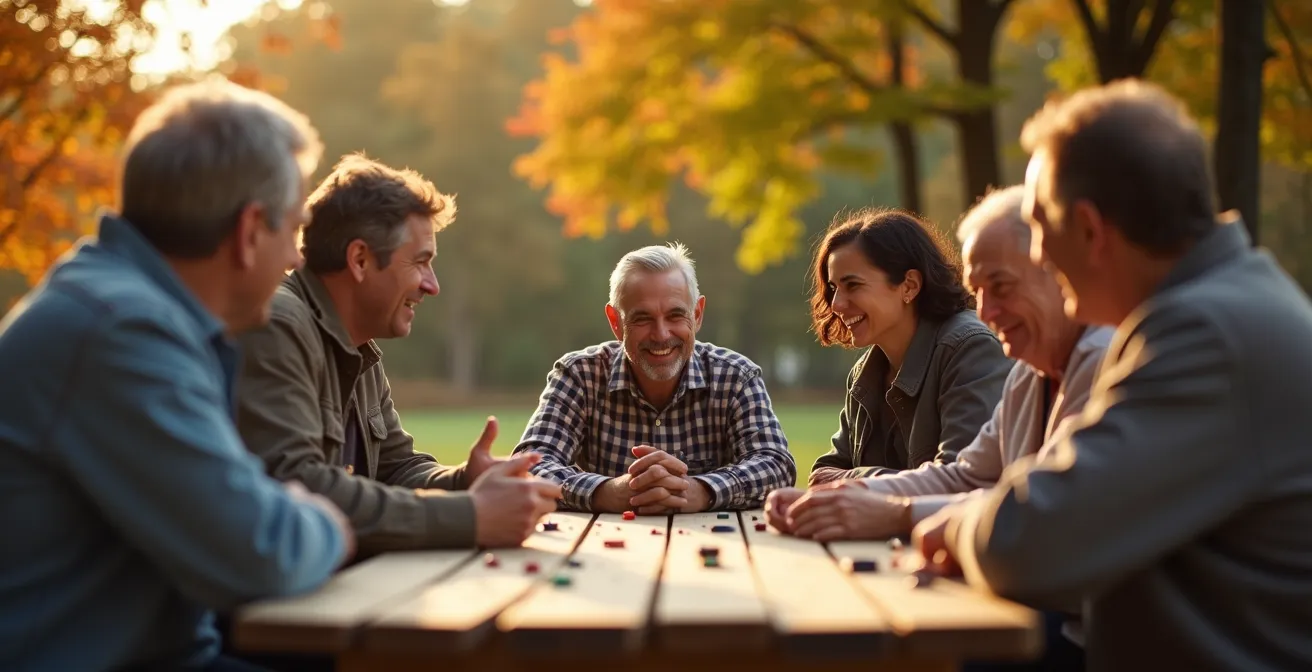
The surprising truth is that chronic loneliness can be more damaging to your long-term health than a poor diet or even smoking, making community connection a powerful form of medicine.
- In Canada, deaths linked to social isolation are estimated to outnumber those from smoking, highlighting a hidden public health crisis.
- Building a “Third Place”—a community hub outside of home and work—is a practical strategy to combat the isolation common among remote workers and newcomers.
Recommendation: Instead of focusing solely on diet and exercise, actively ‘prescribe’ yourself small, consistent doses of social interaction, like joining a local club or even just chatting with your neighbourhood barista.
We’ve all heard the advice for a long and healthy life: eat your greens, get more exercise, and maybe cut back on sugar. We meticulously track our steps and scrutinize food labels, believing these are the primary levers for our well-being. But what if one of the most potent factors for longevity has been overlooked? What if the key isn’t found on our plate or in the gym, but in the curling club, the community rink, or the local coffee shop?
The notion that loneliness is emotionally painful is not new. For many Canadians, especially newcomers to a city or the ever-growing population of remote workers, this feeling is a quiet, persistent hum in the background of daily life. We often dismiss it as a personal failing or an unavoidable part of modern living. But a growing body of scientific evidence is reframing this narrative entirely. Loneliness isn’t just a feeling; it’s a profound physiological threat with health consequences as severe as well-known physical risk factors.
This article moves beyond the platitude that “people need people.” We will explore the concrete, biological reasons why social connection is a vital health intervention. We’ll dismantle the idea that you’re either a “social person” or not, and instead present community building as a practical, learnable skill. From understanding the life-threatening impact of isolation to finding your “third place” and harnessing the power of the “love hormone” even when you live alone, you’ll discover why investing in your social health might be the single most effective decision you make for a longer, healthier life in Canada.
This guide breaks down the science and provides a practical roadmap for weaving a stronger social fabric into your life. The following sections will equip you with the understanding and tools to turn connection into a cornerstone of your personal health strategy.
Summary: Why Social Connection Is Your Strongest Health Pillar
- Why Is Isolation as Dangerous as Smoking 15 Cigarettes a Day?
- How to Build a “Third Place” When You Work from Home?
- Giving or Doing: Which Activity Builds Stronger Social Bonds?
- The “Spotlight” Effect: Why You Think Everyone Is Judging You (But They Aren’t)?
- Why Chatting with Your Barista Boosts Your Mood for the Day?
- Loneliness or Smoking: Which Is Actually More Deadly for Canadians?
- The “Screen Kid” Problem: Why Lack of Green Space Stunts Development
- How to Boost Your “Love Hormone” Levels Even If You Live Alone?
Why Is Isolation as Dangerous as Smoking 15 Cigarettes a Day?
The comparison sounds like an exaggeration, but it comes directly from the highest levels of public health. As former U.S. Surgeon General Dr. Vivek Murthy stated, the impact of loneliness on our lifespan is profound. In an interview, he explained the stark reality:
Loneliness is associated with a reduction in your lifespan that is as severe as the lifespan you see with smoking 15 cigarettes a day.
– Dr. Vivek Murthy, CBS This Morning interview
This isn’t just a metaphor. Chronic isolation triggers a real biological stress response in the body, similar to a constant state of “fight or flight.” It elevates levels of the stress hormone cortisol, which over time leads to chronic inflammation—a root cause of many major diseases. This isn’t just a feeling; it’s a physiological state that, according to one major Canadian study, can lead to a 29% increased risk of death from heart disease and a 50% increased risk for dementia. When your body perceives you as alone and vulnerable, it remains on high alert, wearing down your physical systems day by day.
So, when we talk about joining a club being more effective than quitting sugar, we’re comparing two biological interventions. Reducing sugar intake lowers inflammation and metabolic stress. Building social connections lowers cortisol and chronic inflammation through a different but equally powerful pathway. Thinking of loneliness as a biological signal, much like hunger or thirst, helps us understand its urgency. It’s your body telling you that a fundamental need for survival is not being met.
Understanding this physical toll reframes the search for community from a simple social nicety to a critical act of self-preservation and health management.
How to Build a “Third Place” When You Work from Home?
For many Canadians, especially those working remotely, life can shrink to two locations: home (the “first place”) and work (the “second place”). When your home is also your office, these two merge, leaving a void where community life used to happen. Sociologist Ray Oldenburg coined the term “third place” to describe the essential anchors of community life—places like cafes, parks, pubs, and community centres—that foster creative interaction and a sense of belonging.
Without a third place, we lose the opportunity for the spontaneous, low-stakes interactions that form the bedrock of a healthy social life. The good news is that these places can be intentionally cultivated. It’s not about suddenly making dozens of friends; it’s about creating a routine of presence in a place where you can be recognized and engage in light-hearted conversation.

Think of the classic Canadian winter scene: a community hockey rink. It’s a perfect example of a third place. People of all ages gather not just to skate, but to chat over hot chocolate, lean on the boards, and share a common experience. It’s this informal, accessible sociability that a social prescription for loneliness aims to create. Finding your third place is about identifying where you can have these small moments of connection on a regular basis.
Your Action Plan: Auditing Your Social Health
- Points of contact: List every place (physical or digital) where you currently interact with others weekly. Think of the coffee shop, the grocery store line, a Slack channel, or a dog park.
- Collecte: For each point of contact, inventory the types of interactions you have. Are they purely transactional (paying for coffee) or do they have a social element (a brief chat with the barista)?
- Cohérence: Compare this list to your personal values and interests. Do these interactions align with your hobbies (e.g., a book club) or sense of purpose (e.g., volunteering)?
- Mémorabilité/émotion: Identify which of these interactions leave you feeling even slightly more energized or positive versus those that are neutral or draining. Focus on what generates a positive feeling, no matter how small.
- Plan d’intégration: Based on your audit, identify one small, concrete action you can take. This could be turning a transactional interaction into a brief social one, or researching one local group that aligns with your interests.
The goal is to move from being an anonymous face to a familiar one, creating a sense of belonging one small interaction at a time.
Giving or Doing: Which Activity Builds Stronger Social Bonds?
Once you’ve decided to seek out more connection, a common question arises: what kind of activity is best? Should you join a team or volunteer for a cause? This is the “giving vs. doing” dynamic, and both are powerful pathways to building social bonds, though they work in slightly different ways. “Doing” involves shared recreational activities, while “giving” focuses on service and contributing to a shared mission.
Neither is inherently superior; the best choice depends on your personality and what you’re seeking. Recreational activities (“doing”) often build bonds through a shared identity and passion. Being part of a hockey league or a hiking club creates an immediate “in-group” feeling. Service-based activities (“giving”) build bonds through a shared purpose and values. Working together at a food bank or organizing a Terry Fox Run connects people on a deeper, mission-driven level. The Government of Canada recognizes the power of both; through programs like New Horizons for Seniors, it invests millions in community-based projects. In fact, the program invests $70 million annually, with 95% of funded projects including social participation objectives.
The following table breaks down the characteristics of each approach within a Canadian context, helping you identify which might be the best fit for you.
| Activity Type | Canadian Examples | Bond Characteristics | Health Impact |
|---|---|---|---|
| Giving (Service) | Terry Fox Run volunteering, food bank support, Canada Day cleanups | Shared mission, purpose-driven connections | Reduces loneliness through value affirmation |
| Doing (Recreation) | Hockey leagues, hiking clubs, French conversation groups | Shared identity, passion-based bonds | Regular physical activity plus social engagement |
| Hybrid Model | Timbits Hockey coaching, Community League organizing | Combines service with activity | Maximum benefit through dual engagement |
Ultimately, the most powerful activities are often hybrids, like coaching a youth sports team, which combine the physical engagement of “doing” with the purpose-driven connection of “giving.”
The “Spotlight” Effect: Why You Think Everyone Is Judging You (But They Aren’t)?
One of the biggest barriers to joining a new group isn’t a lack of options, but a powerful internal fear: the fear of judgment. Walking into a room full of strangers, we often feel a harsh spotlight is on us. We worry that we’ll say the wrong thing, that our skills won’t be good enough, or that we simply won’t fit in. This psychological phenomenon is known as the “spotlight effect”—our tendency to overestimate how much others notice our appearance or behaviour.
The reality is that most people are far too concerned with their own “spotlight” to focus intensely on yours. This is especially true in community groups, where the primary goal is often fostering a welcoming environment. The very existence of a local club or group is proof that its members value connection over perfection. They are there for the same reason you are: to connect with others.

This internal barrier is often the most difficult one to cross. The feeling of standing at the threshold, convinced all eyes are on you, can be paralyzing. But the truth, confirmed by those on the inside, is almost always the opposite. As one Halifax running club organizer put it, their focus is on inclusion, not evaluation:
Our primary goal is welcoming new members, not judging performance. Everyone starts somewhere, and we’re just happy when people show up.
– Halifax running club organizer
The secret is to shift your focus from performance to participation. Your presence is the goal. Showing up is the victory. The rest is just detail.
Why Chatting with Your Barista Boosts Your Mood for the Day?
We often think of social connection in terms of deep, meaningful friendships. While these are incredibly important, we overlook the immense power of more casual relationships—what sociologists call “weak ties.” These are the friendly acquaintances in our lives: the barista who knows our order, the neighbour we say hello to, or the dog owner we see at the park every morning. These interactions may seem trivial, but they are potent mood boosters and critical components of our social fabric.
Weak ties provide a sense of familiarity, recognition, and belonging without the pressure of deep friendship. Each small interaction reinforces the idea that you are part of a community and that your presence is noted. This is a cornerstone of a “social prescription”—it’s not about finding a new best friend tomorrow, but about accumulating small, positive social “doses” throughout your day.
The Tim Hortons Effect on Canadian Social Fabric
There’s no better Canadian example of weak ties in action than Tim Hortons. Serving a massive portion of the country’s daily coffee, it acts as an unofficial community hub. Research shows that with nearly half of Canadian adults visiting at least weekly, these routine visits create countless “weak tie” interactions that strengthen community bonds. The brand’s deep integration into local life, from Timbits Hockey sponsorships to being the default meeting spot, transforms a simple coffee run into a micro-ritual of belonging and identity affirmation. For many, the brief, friendly exchange at the counter is a predictable and comforting piece of their social landscape.
These interactions work because they are low-effort yet high-reward. They confirm our place in the social world and combat the feeling of anonymity that often accompanies loneliness. A simple “How’s your day going?” can trigger a small release of oxytocin, the “love hormone,” leaving you with a lingering feeling of warmth and connection. Accumulating these moments is like building a social safety net, one thread at a time.
By recognizing and intentionally engaging in these micro-interactions, you are actively managing your social well-being in a sustainable and low-pressure way.
Loneliness or Smoking: Which Is Actually More Deadly for Canadians?
For decades, public health campaigns have rightly targeted smoking as a major cause of preventable death in Canada. The health risks are well-documented and widely understood. Yet, the data on social isolation reveals a quieter but equally devastating public health crisis. When you compare the raw numbers, the scale of the problem becomes shockingly clear.
According to research compiling data from sources like Statistics Canada and Mount Sinai Hospital, the annual death toll from smoking is staggering. However, when health experts estimate the mortality impact of loneliness—factoring in its contribution to heart disease, dementia, stroke, and suicide—the numbers are even more grim. In Canada, the 37,000 annual smoking-related deaths are tragically dwarfed by an estimated 45,000 deaths linked to loneliness and social isolation. This isn’t an apples-to-oranges comparison; it’s a direct look at two major risk factors and their lethal consequences.
The following table puts this into perspective, outlining not just the mortality impact but also the prevalence and healthcare costs associated with both risk factors in Canada. While smoking rates have been declining, the risk of social isolation, particularly among seniors and remote workers, is on the rise.
| Risk Factor | Prevalence in Canada | Mortality Impact | Healthcare Cost |
|---|---|---|---|
| Smoking | 11.4% of adults (2023) | 37,000 deaths/year | $6.5 billion annually |
| Social Isolation | 30% of seniors at risk | 45,000 deaths/year (est.) | Increased doctor visits, mental health services, long-term care burden |
| Combined Risk | Unknown overlap | Compounded effects | Significantly higher healthcare utilization |
It highlights the critical need to treat social connection not as a luxury or a soft skill, but as a fundamental pillar of public health, just as vital as tobacco control.
The “Screen Kid” Problem: Why Lack of Green Space Stunts Development
While the title may evoke images of children, the “Screen Kid Problem” is a metaphor that increasingly applies to adults. In an era of remote work and digital communication, many of us have become tethered to our screens, our social lives mediated through glowing rectangles. This digital-first existence often comes at the cost of engagement with the physical world, including both community spaces and natural green spaces, which are essential for well-being.
Screens promise connection but often deliver a hollow substitute. While online communities can be a lifeline, an over-reliance on them can displace the face-to-face interactions that our biology craves. The passive consumption of social media, in particular, can create a false sense of social fulfillment while actively increasing feelings of isolation and comparison. It’s a paradox: the more we watch other people’s lives online, the less we may participate in our own.
The data backs this up. It’s not just a feeling; there’s a measurable correlation between high screen use and social distress. In fact, a recent Canadian health survey revealed that adults spending over two hours a day on social media are twice as likely to report feeling socially isolated. This screen-centric lifestyle pulls us away from the very places where genuine connection happens—the parks, trails, community centres, and even the simple neighbourhood sidewalk. These are the modern “green spaces” for social development, and we neglect them at our peril.
It requires purposefully scheduling time for unstructured, real-world engagement—choosing a walk in the park over another scroll through your feed, or a local event over a night of streaming.
Key Takeaways
- Loneliness is a physiological condition that can be as detrimental to your lifespan as smoking 15 cigarettes a day due to its impact on chronic stress and inflammation.
- Actively building a “Third Place” (a community hub outside home and work) is a key strategy for fostering the low-stakes social interactions essential for well-being.
- Fear of judgment (the “spotlight effect”) is a primary barrier to joining groups, but most communities are far more welcoming than we imagine.
How to Boost Your “Love Hormone” Levels Even If You Live Alone?
A key biological reward of social connection is the release of oxytocin, often called the “love hormone” or “bonding hormone.” It’s a neurochemical that promotes feelings of trust, empathy, and connection. While it’s famously released during close physical contact, a common misconception is that you need a romantic partner or immediate family to experience its benefits. Fortunately, you can trigger its release in many ways, even if you live alone.
The secret lies in experiencing moments of shared emotion and identity with a larger group, a phenomenon sociologists sometimes call “collective effervescence.” Being part of a crowd cheering for the same team, singing along at a concert, or participating in a large festival creates a powerful sense of unity that floods your system with oxytocin. You feel part of something bigger than yourself, and that feeling is a potent antidote to loneliness. This is why being a passionate fan of the Raptors, Canadiens, or Flames can be genuinely good for your health—it provides a tribal identity and a regular schedule of collective emotional experiences.
Service is one of the most powerful antidotes to loneliness.
– Dr. Vivek Murthy
Beyond being a spectator, engaging in acts of service or even simply caring for a pet are proven ways to boost oxytocin. The Canadian Veterinary Medical Association has noted the significant reduction in loneliness among pet owners. The act of caring for another being—whether a person, animal, or a community project—shifts your focus outward and triggers the same bonding chemistry. The following list offers practical, Canadian-centric ways to get your dose of oxytocin, no partner required.
Solo-Living Strategies for an Oxytocin Boost in Canada
- Attend major Canadian sporting events (Raptors, Canadiens, Flames games) for collective effervescence experiences.
- Participate in free Canada Day concerts and major festivals like the Calgary Stampede for crowd energy.
- Follow a local CFL or NHL team deeply to trigger vicarious belonging and identity-based hormonal rewards.
- Adopt a pet—Canadian Veterinary Medical Association data shows significant loneliness reduction.
- Join virtual fan communities for Canadian teams to maintain connection even when watching alone.
By understanding these mechanisms, you can consciously choose activities that not only bring you joy but also deliver a powerful, health-promoting dose of this essential hormone.