
The ‘healthy’ habits you’re dedicated to might be the very reason your testosterone is plummeting.
- Unseen visceral fat is sabotaging your hormones by converting testosterone to estrogen, even if you appear ‘thin’.
- Your fitness routine, particularly chronic cardio, and poor sleep hygiene can spike stress hormones that directly kill testosterone production.
Recommendation: Stop guessing and start targeting the real metabolic saboteurs with precise nutrition, smarter training, and a structured recovery architecture.
You’re doing everything right. You hit the gym consistently, you prioritize protein, you avoid junk food, and you try to get decent sleep. Yet, something is off. The energy isn’t there, your libido has taken a nosedive, and you might be noticing a stubborn layer of fat around your midsection that just won’t budge. It’s a frustrating paradox for any man in his 30s or 40s who is actively trying to stay healthy and fit. You feel like you’re fighting an uphill battle, and in many ways, you are.
You’ve likely heard the standard advice: “lift heavier,” “reduce stress,” or “get more sleep.” While not wrong, this advice fails to address the nuances of male hormonal health. It ignores the complex interplay of factors that can undermine even the most disciplined efforts. The problem isn’t that you’re not doing enough; it’s that your well-intentioned habits might be creating hormonal blind spots. These are the hidden factors in your lifestyle that are quietly sabotaging your body’s ability to produce testosterone.
But what if the key isn’t just about working harder, but smarter? What if the solution lies in uncovering the specific metabolic saboteurs unique to your lifestyle and environment? This article isn’t another generic list of tips. It’s a diagnostic tool designed to expose the hidden traps—from the wrong type of body fat and flawed cardio routines to the very tests you use to measure your health—that are crushing your T-levels. We will dissect these saboteurs, providing a clear, evidence-based playbook for reclaiming your vitality, specifically tailored for the Canadian context.
To navigate this complex topic effectively, this guide breaks down each of these critical factors. The following summary outlines the key areas we will explore, helping you pinpoint exactly where your efforts might be going astray and how to correct your course for optimal hormonal health.
Summary: Uncovering the Hidden Saboteurs of Male Hormonal Health
- Why Does Belly Fat Lower Testosterone in Men?
- How to Use Deep Sleep to Sprout Your Testosterone Levels Naturally?
- Spit or Blood: Which Test Reveals Your True Free Testosterone?
- The Cardio Mistake That Kills Your T-Levels
- When to Eat Fat: The Importance of Cholesterol for Hormone Synthesis?
- The BMI Mistake: Why Thin People Can Still Have ‘Obese’ Metabolic Markers
- The Dark Side of Bonding: Does Oxytocin Make You More Suspicious of Strangers?
- Why Is Contrast Therapy the Secret Weapon for Recovery?
Why Does Belly Fat Lower Testosterone in Men?
The most insidious metabolic saboteur for men isn’t just fat; it’s a specific type of fat. Visceral fat, the hard, internal fat that wraps around your organs and contributes to a firm “pot belly,” is a hormonally active organ. It functions like an estrogen factory in your body. This fat is rich in an enzyme called aromatase, whose primary job is to convert your precious testosterone into estrogen. The more visceral fat you carry, the more aromatase you have, and the more efficiently your body turns its primary male hormone into its female counterpart. This creates a vicious cycle: low testosterone encourages more fat storage, which in turn produces more estrogen, further lowering testosterone.
This process directly undermines all the hard work you do in the gym. You can build muscle, but if your hormonal environment is estrogen-dominant due to excess visceral fat, you won’t experience the full benefits of strength, vitality, and libido that healthy testosterone levels provide. The issue is especially pertinent for Canadian men, who often experience lifestyle shifts during long winters that can encourage visceral fat accumulation through changes in diet and activity levels. Identifying and targeting the dietary drivers of this fat is the first critical step to breaking the cycle and restoring your hormonal balance.
Your Action Plan: Combatting Visceral Fat in Canada
- Identify ultra-processed foods in your diet: Typical Canadian staples like Tim Hortons pastries and frozen convenience foods from Loblaws significantly increase insulin resistance, a key driver of visceral fat. Start by logging your intake for one week to see where these foods hide.
- Track your winter weight gain patterns: Many Canadians gain an average of 2-3 kg during the winter months, which disproportionately affects waist circumference. Be mindful of this seasonal shift and proactively adjust your diet and activity.
- Measure your waist-to-height ratio instead of BMI: For optimal metabolic health, your waist circumference should be less than 0.5 your height. This is a far better indicator of dangerous visceral fat than BMI alone.
- Replace high-glycemic index foods: Swap out white breads and sugary snacks for whole grains, legumes, and fibre-rich vegetables available at Canadian retailers like Metro and Sobeys to stabilize insulin levels.
How to Use Deep Sleep to Sprout Your Testosterone Levels Naturally?
You might think of sleep as passive rest, but for your hormones, it’s peak production time. The majority of your daily testosterone is synthesized during the stages of deep sleep (also known as slow-wave sleep). When you consistently fail to get enough high-quality, uninterrupted sleep, you are robbing your Leydig cells—the testosterone factories in your testes—of their primetime manufacturing window. Getting only five hours of sleep a night for just one week can slash a young man’s testosterone levels by 10-15%, equivalent to aging 10-15 years overnight. This is a profound hormonal blind spot for many driven men who sacrifice sleep for work or training.
For Canadians, this challenge is compounded by long, dark winters that disrupt our natural circadian rhythm. Lack of morning sunlight exposure can delay the natural cortisol spike needed for wakefulness and suppress melatonin production at night, leading to shallow, fragmented sleep. A crucial, often-overlooked factor is Vitamin D, the “sunshine vitamin.” Its deficiency is rampant in northern latitudes and is directly linked to poor sleep quality and low testosterone.
This is not just a theory; it’s a proven intervention. A powerful example comes from one of the most elite groups on the planet.
Case Study: Navy SEALs and Vitamin D Supplementation
Navy SEALs presenting with severe sleep disturbances and low testosterone were found to have a common deficiency: Vitamin D3. When they were supplemented with high doses of 6,000-8,000 IU nightly—far exceeding the standard recommended dietary allowance—the results were transformative. They began experiencing deeper, more restorative sleep, their testosterone levels rebounded, and their moods stabilized, all without the need for prescription sleep medications. This highlights the powerful link between this single nutrient, sleep architecture, and hormonal health.
To combat the Canadian winter’s effect on your sleep and hormones, consider using a light therapy lamp for 15-30 minutes upon waking. This mimics morning sun and helps reset your internal clock, promoting deeper sleep at night.

As this setup shows, integrating simple tools into your morning routine can create a powerful downstream effect on your sleep quality and, consequently, your body’s ability to produce testosterone naturally. It’s about building a robust recovery architecture that works with your body’s biology, not against it.
Spit or Blood: Which Test Reveals Your True Free Testosterone?
If you suspect low testosterone, your first instinct is to get tested. But here lies another critical hormonal blind spot: not all tests tell the whole story. Most standard doctor-ordered tests measure Total Testosterone. This number, however, can be misleading because the majority of testosterone in your blood (around 98%) is bound to proteins like Sex Hormone-Binding Globulin (SHBG) and albumin. This bound testosterone is not “bioavailable”—your body can’t use it to build muscle, fuel libido, or support cognitive function.
The number that truly matters for how you feel and perform is Free Testosterone. This is the tiny fraction (about 2%) of unbound, active hormone that can freely enter cells and exert its effects. A man can have a “normal” Total T level but a low Free T level due to high SHBG, and he will experience all the symptoms of low testosterone. Therefore, insisting on a comprehensive panel that includes Total T, Free T, and SHBG is non-negotiable for getting an accurate picture of your metabolic signature. While salivary tests can measure free hormones, a blood test remains the gold standard for a full diagnostic panel.
Unfortunately, navigating the Canadian healthcare system to get these tests can be challenging. Provincial health plans often have strict criteria and limitations, meaning the most crucial markers might not be covered, forcing you to seek private options. For example, a look at Ontario’s guidelines reveals that crucial tests for a full hormonal picture are often not covered by provincial insurance, as detailed in a report by Teletest, a private lab service, which states that Free Testosterone and Estradiol tests are NOT covered by OHIP.
This variance in coverage across provinces is a key hurdle for Canadian men seeking answers. Understanding these differences is essential for advocating for your health.
| Test Type | OHIP (Ontario) | MSP (BC) | Private Cost (Approx.) |
|---|---|---|---|
| Total Testosterone | Covered | Covered (AM only) | $40-$60 |
| Free Testosterone | Not Covered | Calculated only | $67 |
| SHBG | Not Covered | Included in calculation | $65 |
| Bioavailable T | Not Covered | Calculated from Total T | $67 |
This data, highlighted by sources like the BC government’s own guidelines, shows that to get the full picture, you may need to invest out-of-pocket. It’s a small price for invaluable information about your true hormonal status.
The Cardio Mistake That Kills Your T-Levels
For decades, “cardio” has been synonymous with health and fat loss. But for male hormonal health, the wrong kind of cardio is a potent metabolic saboteur. The common mistake is engaging in excessive, long-duration, moderate-intensity cardio—think 60-minute jogs on the treadmill several times a week. This type of activity, often called “chronic cardio,” sends a continuous stress signal to your body. In response, your adrenal glands pump out cortisol, the primary stress hormone.
Cortisol is catabolic, meaning it breaks down tissue, and it operates in a direct seesaw relationship with testosterone. When cortisol is high, testosterone production is suppressed. Your body, perceiving a state of chronic stress (as if you’re constantly running from a predator), shifts its resources away from “non-essential” functions like reproduction and muscle building and toward immediate survival. This is why marathon runners and endurance athletes often post shockingly low testosterone levels. As one expert on exercise and hormones explains, this is a clear sign of doing harm.
As Todd Schroeder, PhD, an associate professor of clinical physical therapy at the University of Southern California, stated in an interview with WebMD, “Elite athletes and amateurs who overtrain can see a drop in their testosterone level, which is a sign that they’re doing harm to their bodies. In these cases, they tend to have low testosterone and high cortisol.”
Elite athletes and amateurs who overtrain can see a drop in their testosterone level, which is a sign that they’re doing harm to their bodies. In these cases, they tend to have low testosterone and high cortisol.
– Todd Schroeder, PhD, WebMD
The solution isn’t to abandon cardio but to be strategic. Prioritize two other forms: High-Intensity Interval Training (HIIT)—short bursts of all-out effort followed by rest—which has been shown to boost T-levels, and Low-Intensity Steady-State (LISS), like a brisk walk, which keeps cortisol low. A 20-minute HIIT session twice a week and a few 30-minute walks are far superior for your hormonal profile than five hours of jogging. This smarter approach, which you can learn more about through resources like the American Council on Exercise, fits into a hormonally balanced training week alongside essential resistance training.
When to Eat Fat: The Importance of Cholesterol for Hormone Synthesis?
In the wake of decades of low-fat dietary dogma, many health-conscious men remain fearful of fat and cholesterol. This is a catastrophic mistake for hormonal health. Cholesterol isn’t the villain it’s been made out to be; it is the fundamental, non-negotiable raw material from which all steroid hormones, including testosterone, are made. Think of it as biochemical currency. Without an adequate supply of dietary cholesterol from healthy fats, your body simply lacks the building blocks to synthesize testosterone, no matter how hard you train.
When you adopt an overly restrictive, low-fat diet, you are essentially putting your hormonal production line on a starvation budget. Your body cannot create testosterone from protein or carbohydrates. It *requires* cholesterol. This is why diets rich in healthy saturated and monounsaturated fats are consistently linked with higher testosterone levels. This means embracing foods that were once demonized and understanding their vital role in your endocrine system.
The key is to focus on whole-food sources of fat, which are abundant in Canada’s natural bounty. Instead of fearing fat, you should be actively incorporating sources like wild Pacific salmon from BC, rich in Omega-3s; grass-fed beef from Alberta, providing healthy saturated fat and zinc; and free-range Ontario eggs, where the cholesterol-rich yolk is a nutritional powerhouse for hormone production. Other critical sources include Manitoba flax seeds, Quebec grass-fed butter, and even high-quality Canadian cold-pressed canola oil.
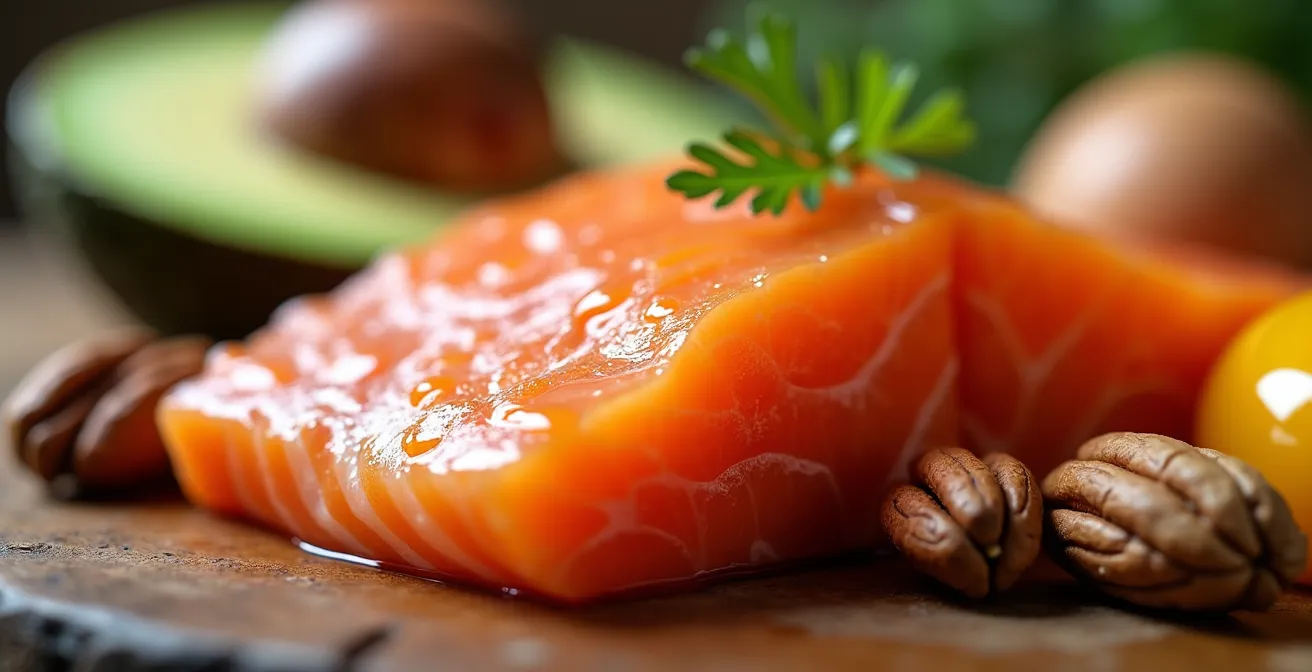
This is not a license to eat indiscriminately. The focus remains on quality. Processed trans fats and oxidized vegetable oils found in junk food are inflammatory and detrimental. But a diet that strategically includes these nutrient-dense, natural fats provides the essential biochemical currency your body needs to maintain a robust metabolic signature and optimal hormonal function.
The BMI Mistake: Why Thin People Can Still Have ‘Obese’ Metabolic Markers
One of the most dangerous hormonal blind spots is relying on the Body Mass Index (BMI) as a measure of health. BMI is a crude, outdated metric that only considers your total weight relative to your height. It tells you absolutely nothing about your body composition—specifically, the ratio of muscle to fat and, most importantly, where that fat is stored. This leads to a phenomenon known as “TOFI”: Thin on the Outside, Fat on the Inside. A man can have a “healthy” BMI but carry a significant amount of dangerous visceral fat around his organs.
This individual is, from a metabolic standpoint, effectively obese. He has the same hormonal and inflammatory risk factors as a visibly overweight person, including the high levels of aromatase enzyme that convert his testosterone to estrogen. Because he looks thin, his doctor may never flag him as being at risk, and he may continue to believe he’s healthy while his vitality, energy, and hormonal balance are silently eroding. His “healthy” appearance masks a dysfunctional metabolic signature.
The science on this is becoming clearer, highlighting the different roles of fat types. While visceral fat is the primary driver of metabolic disease, even subcutaneous fat (the fat under the skin) plays a role. In fact, a comprehensive 2023 study found that subcutaneous fat was negatively correlated with testosterone, even after adjusting for other factors. This underscores that excess body fat of any kind is a burden on your endocrine system. This is why ditching the scale and the BMI chart in favour of a simple measuring tape is so crucial. Your waist-to-height ratio (keeping your waist circumference less than half your height) is a far more accurate and meaningful indicator of your true metabolic health and hormonal environment.
The Dark Side of Bonding: Does Oxytocin Make You More Suspicious of Strangers?
When we discuss hormones, we often focus on testosterone and cortisol. But other hormones, like oxytocin, play a subtle yet powerful role in the complex web that governs our stress levels and, by extension, our T-production. Oxytocin is often called the “love hormone” or “bonding hormone” because it promotes feelings of trust, empathy, and social connection. However, this rosy picture is incomplete. Emerging research reveals a darker, more primitive side to its function.
Oxytocin’s primary evolutionary role is to enhance the survival of the “in-group.” It strengthens bonds with those we perceive as ‘us’ (our family, our team, our tribe), but it can simultaneously increase suspicion, distrust, and even hostility toward those we perceive as ‘them’ (strangers, competitors, or outsiders). This isn’t about conscious prejudice; it’s a deep-seated biological mechanism. In a modern context, this can manifest as heightened social anxiety, a constant feeling of being judged, or a defensive posture in competitive work environments.
This creates a hidden source of chronic, low-grade stress. This persistent state of social vigilance and suspicion is a metabolic saboteur that, like any other stressor, elevates cortisol levels. As we’ve established, when cortisol goes up, testosterone production goes down. So, while you might not feel “stressed” in the traditional sense, this underlying social-hormonal mechanism could be contributing to the high-cortisol, low-testosterone state you’re trying to fight. Recognizing this can be the first step toward addressing social stressors that you may have previously dismissed as just “part of life.”
Key Takeaways
- Visceral belly fat acts as an estrogen-producing factory in your body, directly converting your testosterone, regardless of your BMI.
- Chronic cardio and insufficient deep sleep are major metabolic saboteurs that spike the stress hormone cortisol, which actively suppresses testosterone production.
- To truly manage your hormones, you must test for *free* testosterone (not just total) and consume adequate healthy fats and cholesterol, the essential building blocks for hormone synthesis.
Why Is Contrast Therapy the Secret Weapon for Recovery?
You can have the most optimized training plan and a perfect diet, but if your recovery is poor, you will never achieve optimal hormonal health. Intense exercise, particularly resistance training, is a stressor that creates microscopic damage to muscle fibres. The magic happens during recovery, when the body repairs this damage and adapts by becoming stronger. Testosterone is a key player in this repair process. If your body is bogged down by inflammation and metabolic waste products from training, it remains in a stressed, high-cortisol state, hindering both repair and testosterone production. This is where you need a dedicated recovery architecture.
Contrast therapy—the simple practice of alternating between hot and cold exposure—is a powerful and ancient tool for accelerating this process. The heat (e.g., a hot shower or sauna) causes vasodilation, widening blood vessels and increasing blood flow to deliver nutrients and oxygen to tired muscles. The subsequent cold exposure (e.g., a cold shower or plunge) causes vasoconstriction, squeezing the blood vessels. This alternating “pumping” action effectively flushes out metabolic byproducts like lactic acid and reduces inflammation, dramatically speeding up recovery time.
This process lowers the overall stress load on your body, allowing your nervous system to shift from a “fight or flight” state to a “rest and digest” state more quickly. This down-regulation of the stress response is crucial for lowering cortisol and creating an environment where testosterone can rebound. For Canadians, this is uniquely accessible. A simple DIY protocol can be highly effective: start with a 3-4 minute hot shower, then step out onto your balcony or patio into the crisp winter air for 30-60 seconds before returning to the heat. Repeating this cycle 3-4 times, always ending on cold, creates a powerful hormonal and circulatory response that supercharges your recovery.
Ultimately, reclaiming your vitality requires a paradigm shift. It’s time to move beyond simply “working out harder” and adopt a more precise, diagnostic approach to your health. By identifying and eliminating the specific metabolic saboteurs in your diet, training, and lifestyle, you create the optimal internal environment for your body to do what it’s designed to do: thrive. Start by getting the right tests to establish a clear baseline of your true hormonal signature.